
.jpg?w=600&h=450)
Why Your Commute Choice Actually Matters
If you're choosing between walking, biking, or riding an electric scooter for campus, the scooter usually wins on time and energy, walking wins on cost, and biking sits somewhere in between. The right answer depends on how far your dorm is from class, how much you're carrying, and how many minutes you have between periods. A ten-minute walk sounds fine on paper, but stack it with a heavy backpack and a tight schedule, and those minutes start costing you sleep and energy.
Walking vs Riding vs Biking
Every mode of getting around a big campus has trade-offs. Walking is free and doesn't require storage, but it's slow and tiring when your schedule is packed back-to-back. Biking cuts travel time significantly, but you still need somewhere to lock it up, and pedaling uphill in humid weather before a morning exam isn't anyone's idea of a good start. An electric scooter for college students splits the difference: it's faster than walking, less physically demanding than biking, and folds up small enough to bring into a lecture hall or a dorm room.
Here's a quick side-by-side of what students usually notice first:
Walking: No cost beyond shoes, but slow, tiring in bad weather, and hard on a heavy backpack over a big campus.
Biking: Faster than walking, but sweaty on warm days and often requires a bike rack or lock.
Electric scooter: Arrives with less effort, folds for easy storage, and covers long routes between buildings without wearing you out.
Choosing an electric scooter for campus commuting doesn't mean giving up walking entirely. Plenty of students ride to the edge of campus, fold the scooter, and walk the last stretch on pedestrian-only paths — which is part of why an electric scooter for college commuting has become such a common sight each fall.
Time Saved Each Week
Time is the real currency during the school year. A 15-minute walk across campus can shrink to 5 or 6 minutes on a scooter, depending on speed limits and path conditions. Multiply that by four or five trips a day, five days a week, and you're looking at several hours saved every single week — hours you could spend studying, sleeping in, or not sprinting to your 8 a.m. class.
This is where a 30 mile electric scooter for campus commuting really shows its value. With that kind of range, one charge can easily cover a full day of back-and-forth trips between dorms, the library, and lecture halls, without needing a midday top-up. Students juggling classes on opposite ends of a sprawling campus tend to feel this benefit the most, since walking the same route multiple times a day adds up to real fatigue by week three. For anyone counting minutes between back-to-back lectures, an electric scooter for college commuting is one of the simplest ways to buy back time without changing your entire schedule.
Cost Comparison
Money matters just as much as time when you're a student. Here's how the basic costs typically break down over a semester:
Walking: Essentially free, though worn-out shoes and lost time have their own hidden cost.
Biking: A used bike can be affordable upfront, but locks, tune-ups, and replacement parts add up.
Electric scooter: A higher upfront cost, offset by no gas, low charging costs, and no parking fees compared to a car or rideshare.
Models like the EC10 Electric Scooter, priced at $629.99 CAD, and the ES4 Electric Scooter at $649.99 CAD, sit in a range that makes sense for a student budget without cutting corners on range or reliability. Riders who want more speed or a longer range might look at the ES6 Electric Scooter or the ET6, priced at $749.99 CAD and $699.99 CAD. Once you factor in the money saved on gas, parking, or rideshare fees, an electric scooter for college commuting can pay for itself well before the semester ends.
Who Benefits Most
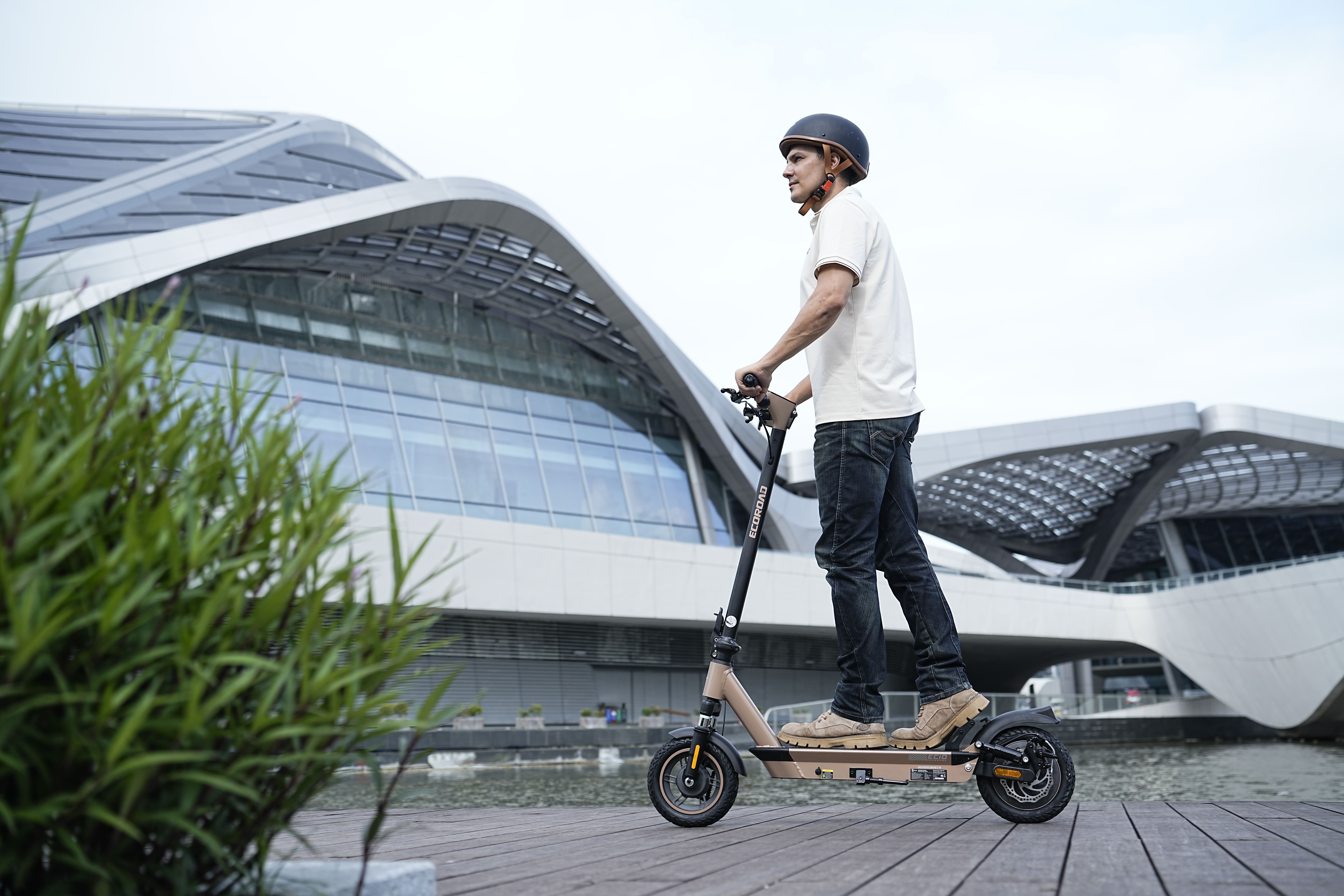
An electric scooter for college students isn't a one-size-fits-all solution. Someone living a five-minute walk from class probably doesn't need to change a thing. But a scooter tends to make the biggest difference for a few specific groups.
Students with back-to-back classes on opposite sides of campus feel the time savings almost immediately. Anyone carrying a heavy backpack, laptop bag, or art supplies benefits from not walking that weight across long distances multiple times a day. First-year students still learning a big campus layout often find a scooter helpful because it makes adjusting routes less exhausting, and an electric scooter for beginners with simple controls keeps that learning curve short.
If you're new to riding, look for an electric scooter for beginners with a straightforward throttle, responsive brakes, and a manageable top speed. Reading through a guide on what to check before your first ride can help you get comfortable faster, especially around busy pedestrian paths near the quad.
The Bottom Line for Your Fall Semester
There's no single right answer for every student, but for most people juggling a full class schedule, a heavy bag, and not enough hours in the day, an electric scooter for college commuting offers the best balance of speed, low effort, and manageable cost. Walking still works fine for short distances, and biking is a solid middle ground if you already own one. But if your classes are spread across a large campus and mornings are already tight, a scooter is worth serious consideration before the semester picks up speed. For more ideas on getting ready for the school year, the guide on who should buy the ET6 is a good next read.
What Campus Riders Want to Know
Is an electric scooter faster than walking on campus?
Yes, most students cut their commute time by more than half compared to walking the same route.
How far can a 30 mile electric scooter for campus commuting actually go in daily use?
It can typically cover a full day of trips between classes, the library, and your dorm on a single charge.
Are electric scooters allowed on most college campuses?
Rules vary by school, so it's worth checking your campus's mobility device policy before your first ride.
What should a beginner look for in a first scooter?
An electric scooter for beginners with simple controls, reliable brakes, and a manageable top speed is the easiest way to start.
Is biking or scootering better for a hilly campus?
A scooter with a strong motor, like the ES4 or ES6, generally handles hills with less physical effort than biking.
Is an electric scooter for college students worth the cost?
For students walking long routes multiple times a day, most find the time and energy saved worth the upfront price.