
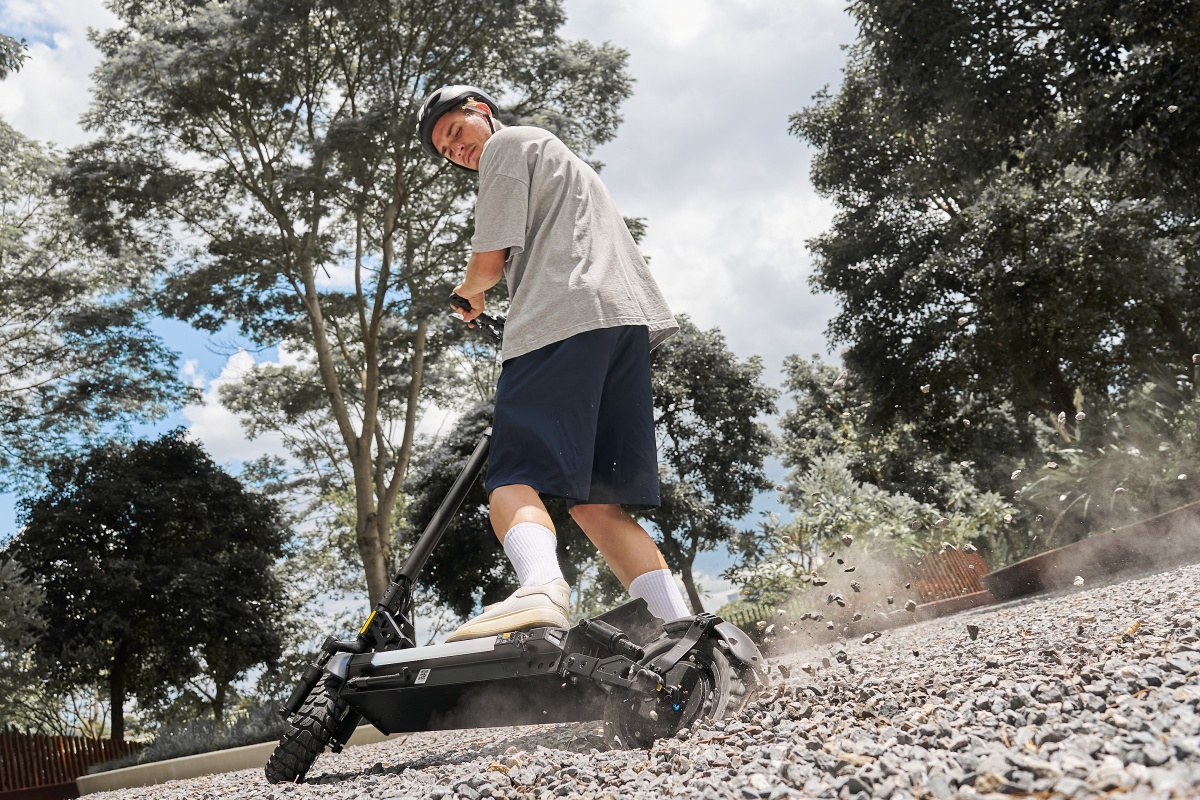
Upgrade your daily routine with an e-scooter. Learn simple ways to save time, reduce stress, and make commuting and errands more efficient.
Your Routine Is Costing You More Time Than You Think
Most people don't realize how much of their day quietly disappears into transportation friction. Their five-minute drive somehow takes twenty, the wait for a ride that throws their whole morning off, the errand run that derails lunch. None of it feels dramatic enough to fix, so it just keeps happening.
An e-scooter won't overhaul your life overnight. But it will chip away at exactly these moments, one trip at a time. The people who get the most out of theirs don't ride it everywhere; they ride it in the right places, consistently, and let the time savings stack up.
Here's how to actually make that happen.
Audit Your Week Before You Change Anything
The fastest way to get value out of an e-scooter is to stop thinking about it in the abstract and start mapping it onto your actual schedule.
Pull up your calendar or just think through a typical week. Where are the trips that happen at least three or four times? Your usual destinations, such as work, the gym, a coffee spot, and a grocery store, show up again and again and are your best opportunities. These are the routes where a scooter turns "routine friction" into something that genuinely takes less time and less mental energy.
Then look for the hidden time drains: the days you circle a parking lot for ten minutes before a 15-minute errand, or the stretches between a transit drop-off and your office where you're just... waiting or walking. Those gaps are where an e-scooter earns its keep most clearly.
The Trips Worth Replacing Right Away

Not every trip is a natural fit for an e-scooter, but a few categories almost always are.
The too-far-to-walk, too-close-to-drive problem
Most people have a handful of regular destinations that sit in this awkward middle distance, roughly one to four miles away. Too far to walk without it eating into your schedule, but genuinely silly to drive when you factor in parking. An e-scooter covers this distance range completely. You'll often arrive faster than you would by car, and you won't have to give a second thought to parking.
The transit gap
If any part of your commute involves public transport, the stretch between your stop and your actual destination is almost always the most annoying part of the whole journey. It's rarely far enough to justify a rideshare, but just inconvenient enough to make the whole commute feel like a hassle. Riding an ECOROAD scooter to the station, folding it up in seconds, and riding the last stretch from the stop to your desk, that alone tends to make the daily commute feel like a completely different experience.
Quick errands that currently need a car
Picking up lunch. Grabbing something from a nearby pharmacy. Dropping something off across the neighborhood. These trips are almost always faster and less stressful on a scooter than in a car, once you factor in finding and paying for parking.
Three Habits That Actually Determine Whether You Ride Daily
Getting an e-scooter and actually riding it every day are two different things. The gap between them comes down to a few specific habits, and none of them are complicated.
Make it impossible to ignore
The single strongest predictor of whether someone uses their scooter regularly is where they store it. A scooter parked near your front door, visible when you're grabbing your keys, gets used. A scooter folded into a storage closet or left in the garage gets forgotten. It sounds almost too simple, but placement genuinely drives habits here.
Treat charging like charging your phone
The fastest way to kill your e-scooter routine is to reach for it in the morning and find it at 8%. Pick one moment in your evening to plug it in. Every night. Without thinking about whether it needs it. Within a week, this becomes automatic.
Do a 60-second check before you head out
Squeeze the brakes, press the tires, glance at the battery level. That's genuinely it. Riders who do this never get caught out by something avoidable mid-ride.

Gear, Weather, and the Days It Doesn't Quite Work
Riding daily means riding in real conditions, not ideal ones. A few simple adjustments make a big difference.
A backpack is non-negotiable for everyday riding. It keeps your weight centered, your hands free, and your balance where it needs to be. A shoulder bag or tote that shifts with every turn gets old fast. If you're commuting to work, a compact backpack that fits a laptop and your essentials is all you need.
The weather is the other variable. Light rain is manageable on most rides, just slow down, give yourself extra braking distance, and avoid painted road markings and metal surfaces where grip disappears. For more extreme conditions, such as heavy rain, ice, and serious wind, have a backup ready. There's no medal for riding through a thunderstorm. The goal is consistency over time, not a perfect streak.
Which ECOROAD Model Fits Your Routine
The right scooter depends on what your days actually look like, not on what sounds impressive in a spec sheet.
For most urban riders, especially those building an e-scooter habit for the first time, the ECOROAD EC9 is the natural starting point. A 500W motor, 30-mile range, and a lightweight build that folds quickly make it genuinely practical for daily use. It's the kind of scooter you grab without deliberating.
For riders who want the most range and power available in the lineup, the ECOROAD ES6 delivers 1000W and 40+ miles per charge. This is more than most commuters will ever need in a single day, but deeply reassuring when you're running multiple errands, taking detours, or riding in conditions that drain the battery faster.
Browse and compare the full lineup at ECOROAD's electric scooter collection.
What Changes After the First Month
There's a shift that tends to happen around the three or four-week mark for riders who stick with it. The scooter stops being the thing you're testing and becomes just how you handle certain trips. The deliberate decision between scooter or drive fades, and the scooter becomes the default.
What often follows is a broader reshaping of how your day flows. Errands that used to cluster because they weren't worth individual trips start happening more spontaneously. The commute that used to feel like dead time becomes something closer to a moment of actual movement in an otherwise desk-bound day. Small things, but they accumulate.
The riders who tell you their e-scooter changed how they move through the city aren't exaggerating. They just started with the same small habits described above and let consistency do the rest.
Straight Answers to Common Questions
How do I know which trips are actually worth switching to a scooter?
A good rule: if the trip is under five miles and you'd normally drive primarily because walking feels too slow, that's your target. Start with two or three of those and expand from there.
What if my workplace doesn't have a good place to store it?
Most ECOROAD models fold down to a compact footprint that fits under a desk, beside a filing cabinet, or in a building bike room. If neither works, some riders lock theirs outside with a solid U-lock, especially in lower-traffic areas. It's worth scoping your building before assuming storage is a problem.
Is it realistic to use an e-scooter in the rain?
If it’s just light rain, yes. But ride cautiously and stay off wet painted lines and metal grates. Heavier rain is where most riders draw the line, not because the scooter can't handle it, but because the ride stops being pleasant. Having a backup plan for those days (transit, rideshare) is all you need.
How long until riding feels completely natural?
Most people hit their stride within two weeks of consistent riding. The first few days involve consciously braking distances, turning radius, and traffic awareness. After that, it becomes muscle memory and stops requiring active thought.
Can I use an e-scooter if part of my commute is on a highway or expressway?
No. E-scooters are built for surface streets, bike lanes, and paths, not high-speed roadways. But for the urban segments of any commute, they handle city traffic confidently and often move through it faster than a car does.