

The Right Scooter Makes Campus Life Significantly Easier
The best electric scooter for college campus use is one that's light enough to carry into class, has enough range to cover your daily routes without mid-day charging, folds quickly for transit and residence storage, and is reliable enough to depend on five days a week. On large campuses like UBC, U of T, or McGill, where buildings can be spread across several city blocks, the right e-scooter turns a 20-minute walk into a 5-minute ride. The wrong one creates storage headaches, range anxiety between classes, and maintenance problems at the worst possible times.
The Five Features That Actually Matter for Students
-0.jpg?w=600&h=450)
Weight and Portability
This is the most underrated spec for campus use. You'll carry your scooter up residence stairs, onto campus shuttles, and through building corridors more often than you expect. Anything over 15 kg becomes genuinely tiring to haul regularly. The EC9 weighs approximately 12.6 kg and folds in seconds — light enough to carry one-handed with a backpack on the other shoulder. The EC10 steps up to 56 km range at approximately 14 kg — still manageable for most students as a daily carry.
Range: How Far Do You Actually Need to Go?
Most campus routes are under 8 km total per day. Even students living off-campus rarely need more than 15-20 km of daily range when you factor in actual commute distances. A scooter with 48-56 km of range covers multiple days of campus riding on a single charge — which means overnight charging every two to three nights rather than every evening.
Charging Time and Removable Battery
Residence room charging logistics are real. A removable battery means you can bring it to class, charge at your desk, and not worry about bringing the whole scooter into a lecture hall. The ET6 includes a removable 48V 15Ah battery and charges fully in 7 to 8 hours. Just plug in when you go to bed, unplug in the morning.
During winters, the removable battery also means you can bring it indoors to keep warm, which protects against cold-weather capacity loss.
Campus Rules and Speed Limits
Every university has different e-scooter policies. Some restrict speeds on pedestrian paths; some require riding in designated bike lanes only; some prohibit scooters in certain buildings. Provincial regulations also vary — e-scooter rules in Ontario differ from those in British Columbia and Quebec. Check your specific campus and provincial rules before buying.
ECOROAD's article on riding electric scooters as a green commuting solution covers the broader regulatory and environmental context that applies across cities.
Security
Campus theft is a real concern at universities. A physical U-lock through the frame at a bike rack covers the basics. App-connected models, including the ET6, add remote lock through the ECOROAD app, which provides a secondary layer that a cut lock can't defeat.
What to Look for in Campus Ride Quality
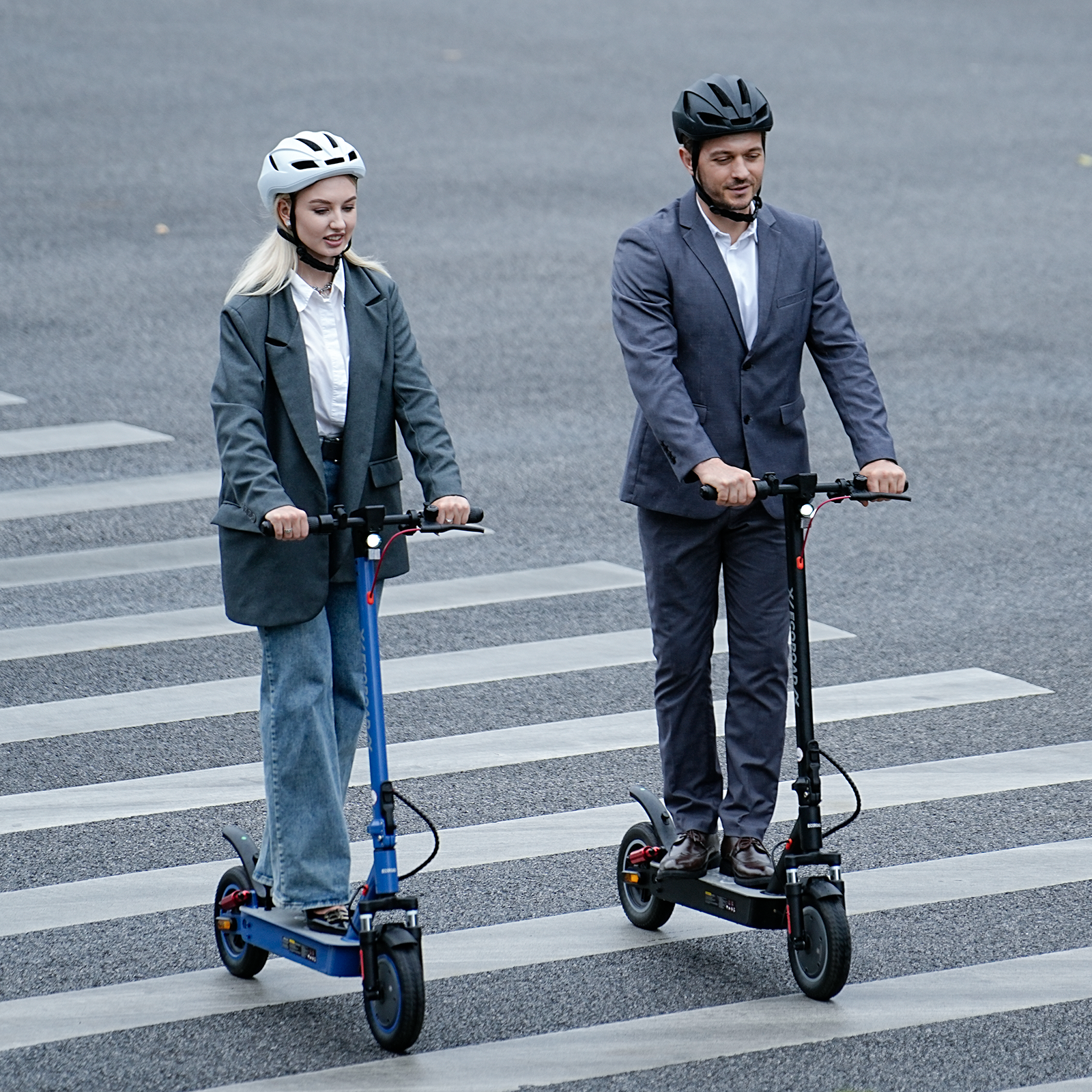
Campus pavement is mixed. Main paths are typically smooth, but shortcut routes, side paths, and off-campus sidewalks in college towns can be rough. Here's what makes the difference between a comfortable campus ride and an uncomfortable one:
-
Pneumatic tires (10 inches preferred) - absorb cracked sidewalks and pothole edges that solid tires transmit directly to the rider
-
Some form of suspension - dual suspension makes rough campus paths noticeably more comfortable over a full day of class-to-class riding
-
Stable deck width - wider decks improve balance when wearing a heavy backpack; the ET6's deck is designed for comfortable daily standing
-
Bright front and rear lights - essential for evening rides after night classes; campus paths are often poorly lit
Matching ECOROAD Models to Student Needs
Budget-focused student on a compact campus:
The EC9 covers 50 km per charge, with a max load of 120 kg, and folds in seconds. It's the lightest and most affordable option for students whose campus is relatively flat and whose daily routes stay under 12 km.
Student with a larger campus or off-campus housing:
The EC10 steps up to 56 km range and a 750W motor — handles longer daily distances and moderate inclines without range anxiety on a bigger campus spread across multiple city blocks.
Student who wants reliability above all:
The ET6's self-healing tires eliminate the flat-tire problem that disrupts commutes at the worst possible times, and its 55 km range means charging every 3-4 days for most students. It reduces the ongoing friction that makes scooter commuting feel like a chore — and the removable battery is particularly practical for residence life.
The Scooter That Gets You to Class on Time
The right e-scooter for college campus life isn't the most powerful or longest-range — it's the one that fits your actual daily routine, stores where you live, charges reliably, and doesn't create new problems while solving the commute. Browse the full ECOROAD lineup to compare models side by side before your semester starts.
What College Student Want to Know
Are electric scooters allowed on U.S. college campuses?
Most campuses permit them with speed and path restrictions; always check your university's specific micromobility policy before buying.
How do I store an e-scooter in a dorm room?
Foldable models like the EC9 and EC10 fold down small enough to fit under a desk, in a closet, or beside a bed without taking up meaningful floor space.
How much does it cost to charge an ECOROAD scooter daily?
At average U.S. electricity rates, a full charge costs approximately $0.11 CAD to $0.16 CAD — negligible compared to any other transportation cost on campus.
What speed is appropriate for campus riding?
Most campuses require 10-15 mph max on pedestrian paths; the ECOROAD models' lower speed modes accommodate this, and higher modes are available for off-campus roads.
Is an electric scooter cheaper than campus parking?
Yes. Campus parking permits typically cost $300 CAD to $1,390 CAD per academic year; an ECOROAD scooter pays for itself in parking savings within one semester at most universities.