
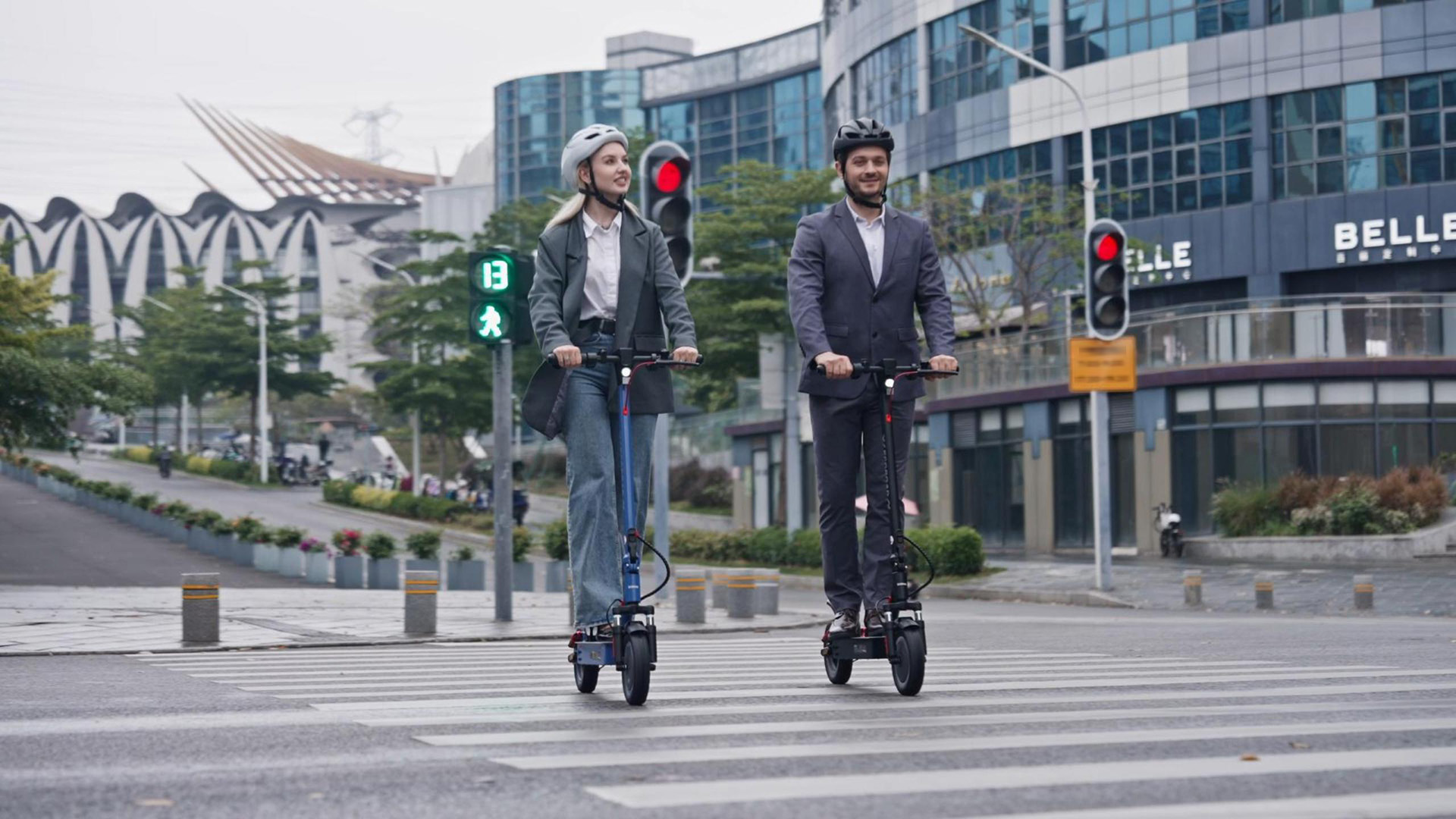
Start With the Pavement You Actually Ride
The best electric scooter for rough roads is one that offers stable tires, reliable brakes, enough power, practical range, and a comfortable ride over potholes, cracked pavement, gravel patches, road grit, and uneven paths. Riders should choose based on real road conditions, not just top speed.
This matters in cities where pavement can change quickly. Toronto bike lanes, Montreal streets after winter, Vancouver wet paths, Calgary pathway connections, and Ottawa multi-use routes can all include rough surfaces. Even a short commute can feel tiring if the scooter is not built for the road underneath it.
ECOROAD’s electric scooter collection includes lightweight commuter models and stronger mixed-use scooters, so it helps to compare them by route, not just price or speed.
Tires Make the Biggest Difference
Tires are the first feature to check when choosing a scooter for rough roads. They affect comfort, braking, grip, and stability. Small or very hard tires can feel harsh on cracked pavement, while larger or more capable tires can help smooth out uneven surfaces.
Roads often collect grit, gravel, and salt residue near curbs and bike lanes. After freeze-thaw cycles, potholes and cracks can appear quickly. Better tires help the scooter feel less nervous when the surface changes.
ECOROAD’s article on light off-road tire scooters in city riding is a helpful read because tire choice affects everyday urban comfort, not only trail riding.
Power Helps With Hills and Rougher Routes
A scooter that feels fine on smooth flat pavement may feel underpowered on hills or rough sections. Motor power helps the scooter maintain momentum when the surface is uneven, the rider is heavier, or the route includes wind and climbs.
The ECOROAD EC9 Electric Scooter lists a 500W motor, 35 km/h top speed, 50 km range, and 120 kg max load. It can fit riders who want more range than a short-trip scooter while staying in a practical commuter category.
The ECOROAD EC10 Electric Scooter lists a 750W motor, 40 km/h top speed, 56 km range, and 120 kg max load. That extra power and range can be useful when rough pavement is part of the daily ride.
Brakes Matter More on Uneven Roads
Rough roads can increase stopping distance. Wet pavement, road grit, gravel, leaves, and downhill sections all reduce traction. A scooter for rough roads should stop predictably, not just accelerate well.
ECOROAD’s guide on why brakes are the most important feature on an electric scooter is worth reading before choosing a scooter. Braking is where comfort and safety meet.
On rough pavement, brake earlier than usual. Slow before turns, avoid sudden braking on gravel, and keep the scooter upright when stopping. Strong brakes are helpful, but smooth braking habits matter just as much.
Range Should Leave Room for Real Conditions
Rough roads can use more battery because the scooter works harder to maintain speed. Hills, cold weather, rider weight, tire condition, and stop-and-go riding can also reduce range.
If your round trip is 15 km, a scooter listed at 15 km is not enough. Give yourself a buffer. For many commuters, a listed range around 34 to 56 km feels more realistic, depending on route and weather.
The ECOROAD ES4 Electric Scooter lists an 800W motor, 40 km/h top speed, 56 km range, 8.5-inch off-road tires, and 150 kg max load. That combination can be useful for riders who want more strength and comfort on imperfect pavement.
Comfort Helps You Stay in Control
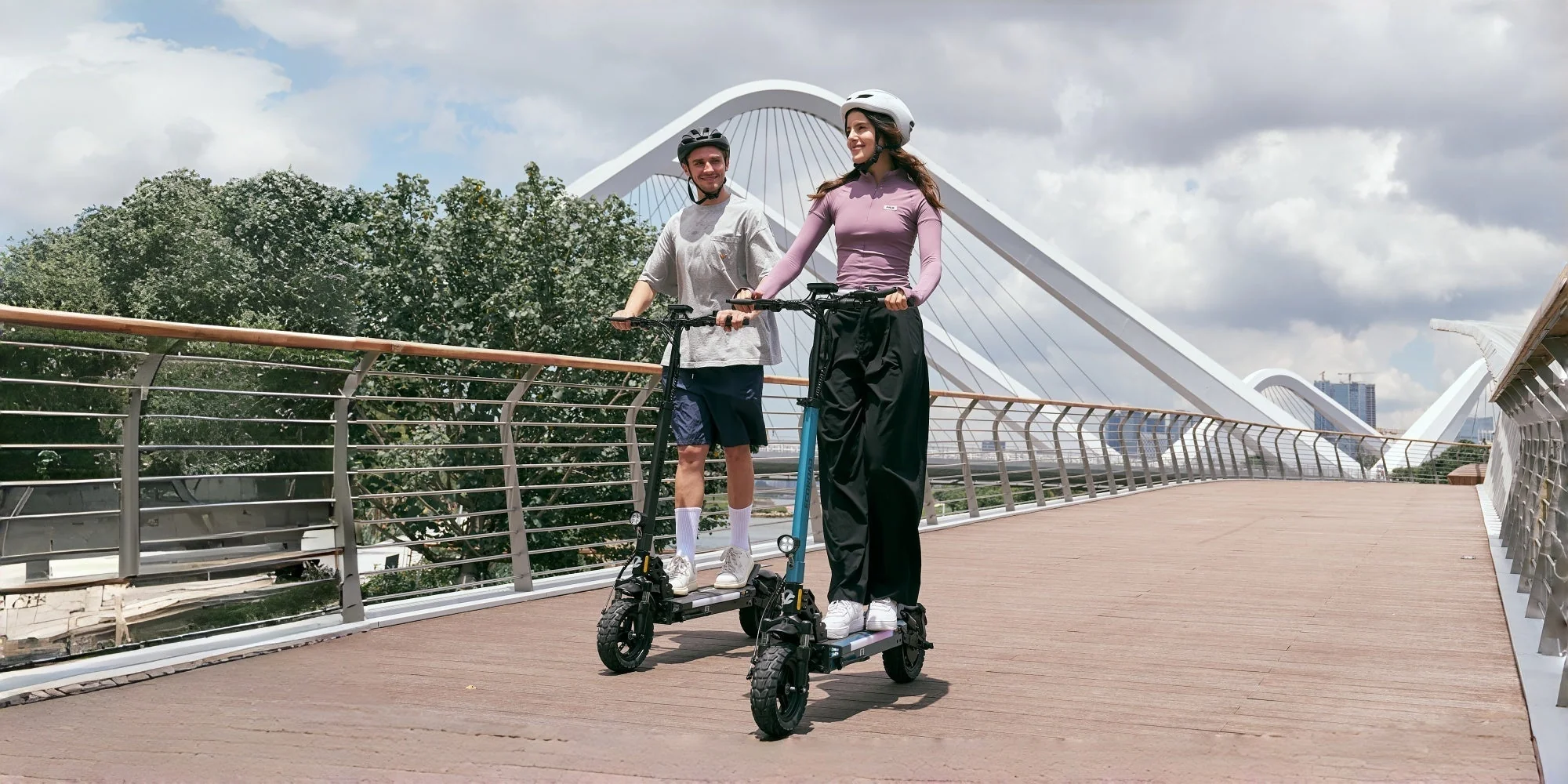
A comfortable scooter is easier to ride safely. If every bump shakes your hands and knees, you may get tired faster and react more slowly. Comfort becomes especially important on longer commutes.
Deck stability, handlebar feel, tire design, suspension, and riding posture all affect comfort. If your city has rough pavement, construction plates, or gritty bike lanes, comfort should be treated like a serious feature, not a bonus.
This is the part of scooter shopping where your wrists quietly vote. Listen to them.
Match the Scooter to Your Daily Routine
Choosing an electric scooter for rough roads is not only about riding. It is also about carrying, storing, and charging the scooter.
If you live in a condo or apartment, check weight and folding design. If you combine the scooter with transit, lighter models may be easier to manage. If you ride longer distances on rough roads, a stronger scooter may be worth the added size.
ECOROAD’s article on foldable electric scooter design is useful because portability still matters even when road comfort is the main concern.
Ride Smoothly on Bad Pavement
Even with the right scooter, technique matters. Slow down before rough sections. Keep your knees slightly bent. Hold the handlebars firmly but not stiffly. Look ahead for potholes, cracks, road debris, wet leaves, and gravel.
Avoid sharp turns on loose surfaces. Do not ride through deep potholes or puddles if you can safely avoid them. In Canada, puddles can hide cracks or potholes, especially after winter. A mysterious puddle is basically a tiny lake with secrets. Best not to trust it.
Check Local Rules Before Riding
Electric scooter rules vary by province and city. Some places restrict sidewalk riding, speed, shared paths, or private e-scooters. Before building your commute around a scooter, check local regulations and posted signs.
This is especially important for park paths, waterfront trails, university areas, and multi-use routes. A scooter that is perfect for rough pavement still needs to be used where scooters are allowed.
Choose the Scooter That Makes Rough Roads Feel Manageable
The right electric scooter for rough roads should give you stable tires, controlled braking, enough range, useful power, and a ride that does not feel punishing. For shorter or lighter commutes, EC8 or EC9 may be enough. For rougher roads, hills, or heavier daily use, EC10 or ES4 may be better fits.
The goal is not to erase every bump. It is to choose a scooter that helps you stay steady, comfortable, and in control when the pavement is less than perfect.
What Rough-Road Riders Usually Ask
What is the best electric scooter for rough roads?
A good rough-road scooter should have stable tires, reliable brakes, enough power, practical range, and a comfortable ride over uneven pavement.
Are bigger tires better for rough pavement?
Often, yes. Larger or more capable tires can smooth out cracks, grit, and small bumps better than smaller hard tires.
Do rough roads reduce scooter range?
Yes. Rough pavement, hills, cold weather, low tire pressure, and frequent stops can reduce real-world range.
Can I ride an electric scooter through potholes?
Avoid deep potholes whenever possible. Slow down and steer around them safely, because potholes can damage tires, wheels, and suspension parts.
Is a lighter scooter better for rough roads?
Not always. A lighter scooter is easier to carry, but a stronger scooter with better tires and more comfort may feel safer on rough pavement.