
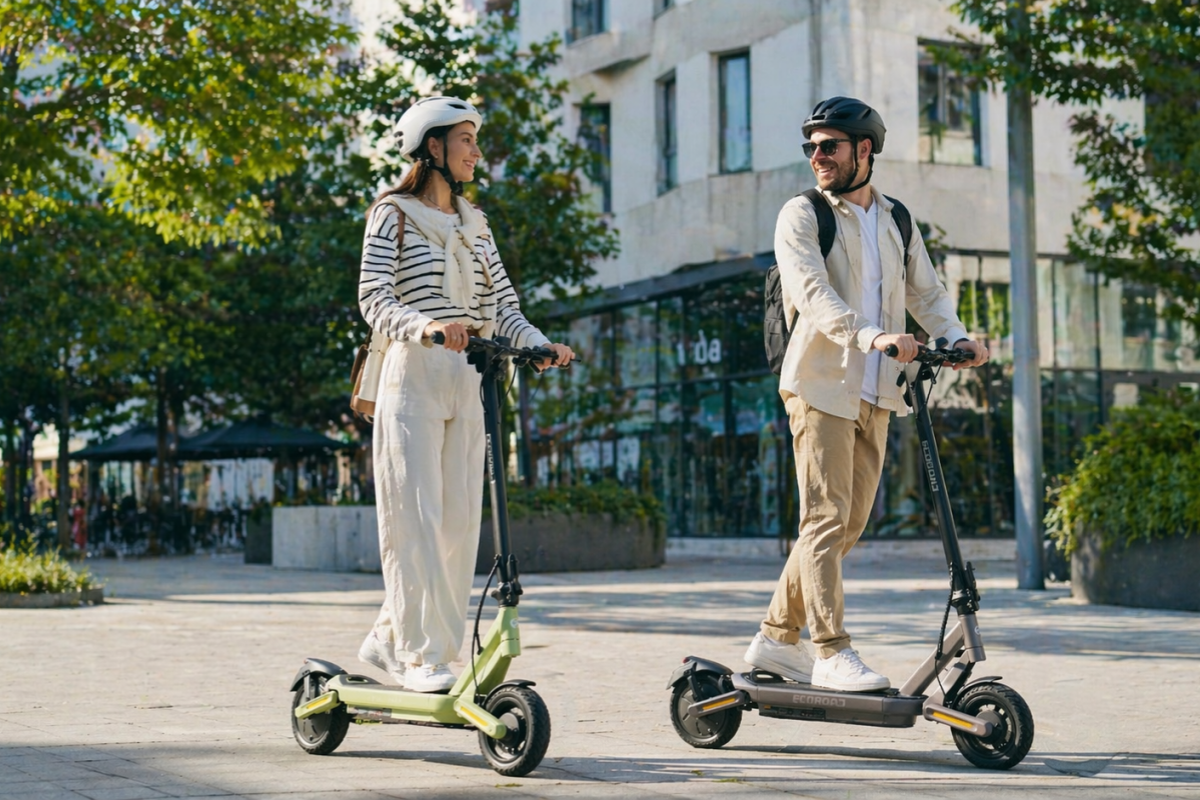
Start With Your Daily Route
The best way to choose an electric scooter for commuting is to match the scooter to your round-trip distance, road conditions, storage needs, local rules, and comfort level. A good commuter scooter should have enough range in kilometres, reliable brakes, stable tires, visible lights, and a design that works with your home, workplace, or transit routine.
A short ride to a SkyTrain station in Vancouver is not the same as a longer trip through downtown Toronto, a university commute in Waterloo, or a hillier route in Halifax. Riders also deal with rain, colder mornings, road grit, and rough pavement after winter.
ECOROAD’s electric scooter collection includes lightweight commuter scooters and stronger models for longer daily rides. The right choice starts with the route you actually ride.
Choose Enough Range in Kilometres
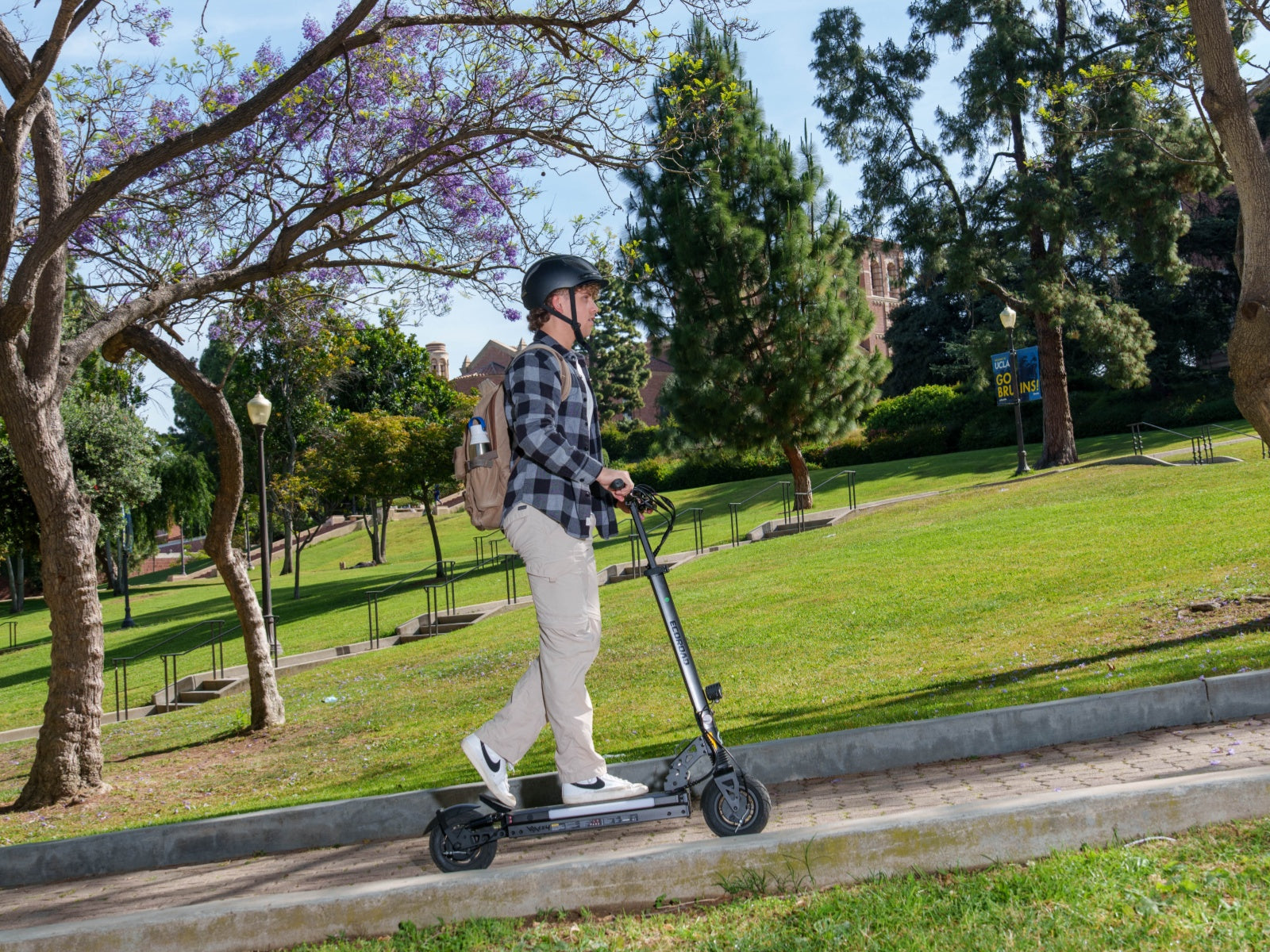
Range is one of the most important commuter specs. If your workplace is 5 km away, your round trip is at least 10 km before errands, detours, hills, wind, or cold weather.
A beginner's mistake is choosing a scooter with just enough range on paper. Real-world range can drop because of rider weight, speed, hills, stop-and-go riding, tire condition, and temperature. In colder weather, battery performance may also decrease.
For shorter trips, the ECOROAD EC6 Electric Scooter lists a 400W peak motor, 30 km/h top speed, 24 km range, and 11.5 kg weight. It may suit riders who want a lighter scooter for shorter commutes or transit connections.
For more range, the ECOROAD EC9 Electric Scooter lists a 500W motor, 35 km/h top speed, 50 km range, and 120 kg max load. That extra range can be useful if your route includes errands or longer gaps between charges.
Put Brakes Before Speed
For commuting, brakes matter more than top speed. A scooter used around cars, cyclists, pedestrians, buses, and intersections needs to slow down predictably.
ECOROAD’s guide on why brakes are the most important feature on an electric scooter is a useful read for commuters too. The basic safety point is universal: stopping control matters most when traffic or road conditions change quickly.
Before your first real commute, practise braking in a quiet area. Get used to how the scooter slows down on dry pavement before adding traffic, bike lanes, hills, or wet surfaces into the mix.
Pick Tires for the Pavement
Pavements can be rough. Freeze-thaw cycles, potholes, road salt, construction plates, wet leaves, and gravel near intersections can all affect handling.
Tires influence comfort, grip, vibration, and stability. A scooter with larger or light off-road tires may feel better if your commute includes rough bike lanes, older streets, park paths, or mixed surfaces.
ECOROAD’s article on light off-road tire scooters in city riding is helpful for understanding why tire design affects urban comfort.
If you ride near the Toronto Waterfront Trail, Vancouver’s seawall connections, Calgary pathway routes, or Ottawa’s multi-use paths, surface changes can happen quickly. Smooth pavement may turn into gravel, wet leaves, or rough patches without much warning.
Think About Portability and Storage
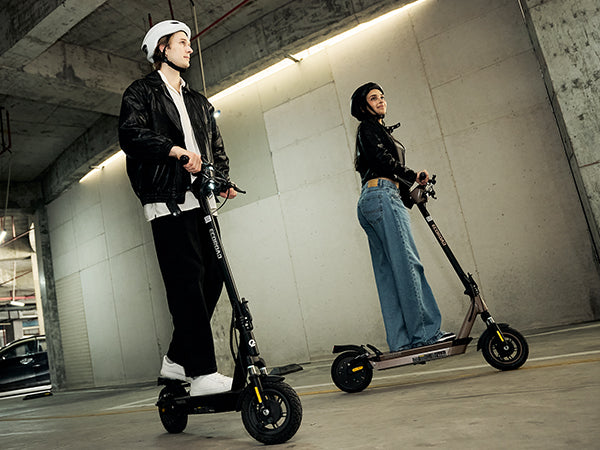
A commuter scooter has to work before and after the ride. If you live in a condo, apartment, or shared house, think about where the scooter will be stored and charged. If you work in an office or study on campus, check whether indoor storage is allowed.
Weight matters if you need to carry the scooter up stairs, lift it into a vehicle, or bring it through a lobby. Foldability matters if you need to store it under a desk or beside a workstation.
ECOROAD’s article on foldable electric scooter design fits naturally here because portability is one of the biggest reasons scooters work for commuting.
Match Power to Hills and Rider Needs
Power helps with hills, acceleration, and heavier loads, but beginners should still choose control over excitement. A commuter scooter should feel smooth, not difficult to manage.
The ECOROAD EC10 Electric Scooter lists a 750W motor, 40 km/h top speed, 56 km range, and 120 kg max load. It may fit riders who want more range and strength for daily city use.
The ECOROAD ES4 Electric Scooter lists an 800W motor, 40 km/h top speed, 56 km range, 8.5-inch off-road tires, and 150 kg max load. That combination can be useful for riders who want more support on rougher pavement or longer routes.
Check Lights and Visibility
Commuters often ride in low light, especially in fall and winter. A scooter should have good front and rear lighting, and riders should consider reflective clothing or extra lights if they commute early or late.
Visibility is not only for night riding. Rain, fog, shaded streets, and busy intersections can all make riders harder to see. Good lights and predictable riding habits help drivers, cyclists, and pedestrians understand where you are going.
Learn Your Local Rules
Electric scooter rules vary by province and municipality. Some cities allow private e-scooters under specific conditions, while others restrict where they can be used. Rules may cover sidewalks, bike lanes, speed, helmets, age, lights, and parking.
Before building your commute around a scooter, check your city’s current rules. Toronto, Vancouver, Calgary, Edmonton, Montreal, and Ottawa may not treat scooters the same way. If you use paths near parks, campuses, or waterfront areas, check those rules too.
Test the Route Before Committing
The best commute route is not always the shortest. A quieter street with bike lanes may be safer and more comfortable than a direct road with fast traffic. A route that looks fine in July may feel different in November rain or after winter road damage.
Try your route on a calm day before relying on it for work. Notice potholes, intersections, hills, traffic patterns, and places where you may need to slow down. If you combine the scooter with transit, test where you can safely fold, carry, or park it.
Build a Commute That Feels Easy to Repeat
Choosing an electric scooter for commuting is about finding the model that fits your daily routine. For short rides and transit connections, the EC8 may be enough. For more range, the EC9 or EC10 may be a better fit. For rougher roads or higher load needs, the ES4 is worth comparing.
The best commuter scooter is the one you can ride safely, store easily, and charge without stress. Start with your route, then choose the scooter that makes that route simpler.
What Commuters Usually Ask
What is the best electric scooter for commuting?
A good commuter scooter should have enough range in kilometres, reliable brakes, stable tires, good lights, and a size that fits your storage needs.
How much range do I need for commuting?
Choose more than your exact round trip. If you ride 15 km per day, a scooter listed around 34 to 56 km gives a useful buffer.
Can I ride an electric scooter on sidewalks?
It depends on the city. Many places restrict sidewalk riding, so check local municipal rules before commuting.
Is a lightweight scooter better for commuting?
It can be, especially if you carry it upstairs, bring it into an office, or combine it with transit. Longer-range scooters may weigh more.
Are electric scooters good for winter commuting?
They can work in mild conditions, but ice, snow, heavy rain, and freezing temperatures reduce safety and battery performance. Ride only when conditions are safe.