
.jpg?w=600&h=450)
Start With Summer Battery Basics
Electric scooter battery hot weather care begins with keeping the scooter out of extreme heat, letting the battery cool before charging, riding smoothly, checking tire pressure, and storing the scooter in a cool, dry place when possible. Heat can reduce range, increase battery stress, and make daily riding harder on the scooter.
Summers may be shorter than in some countries, but heat still matters. Toronto, Montreal, Ottawa, Calgary, Vancouver, Winnipeg, Halifax, and Victoria can all see hot days, humid weather, sudden storms, and busy summer paths. During heat waves, pavement and direct sun can warm a scooter quickly.
Good battery care does not require complicated habits. It mostly means avoiding unnecessary heat, charging at the right time, and choosing a scooter that suits your route.
Why Heat Affects Scooter Batteries
Most electric scooters use lithium-ion batteries. These batteries prefer moderate temperatures. When the battery gets too hot, it may lose range, charge less efficiently, or trigger protective systems that reduce power.
Hot weather becomes more demanding when combined with hills, heavy riders, backpacks, low tire pressure, rough pavement, or frequent stops. A scooter climbing a hill in 30°C weather is working much harder than the same scooter rolling along a flat path on a mild morning.
This is why battery care is not only about the charger. It is also about how the scooter is ridden, parked, and maintained.
Do Not Park in Direct Sun for Long Periods
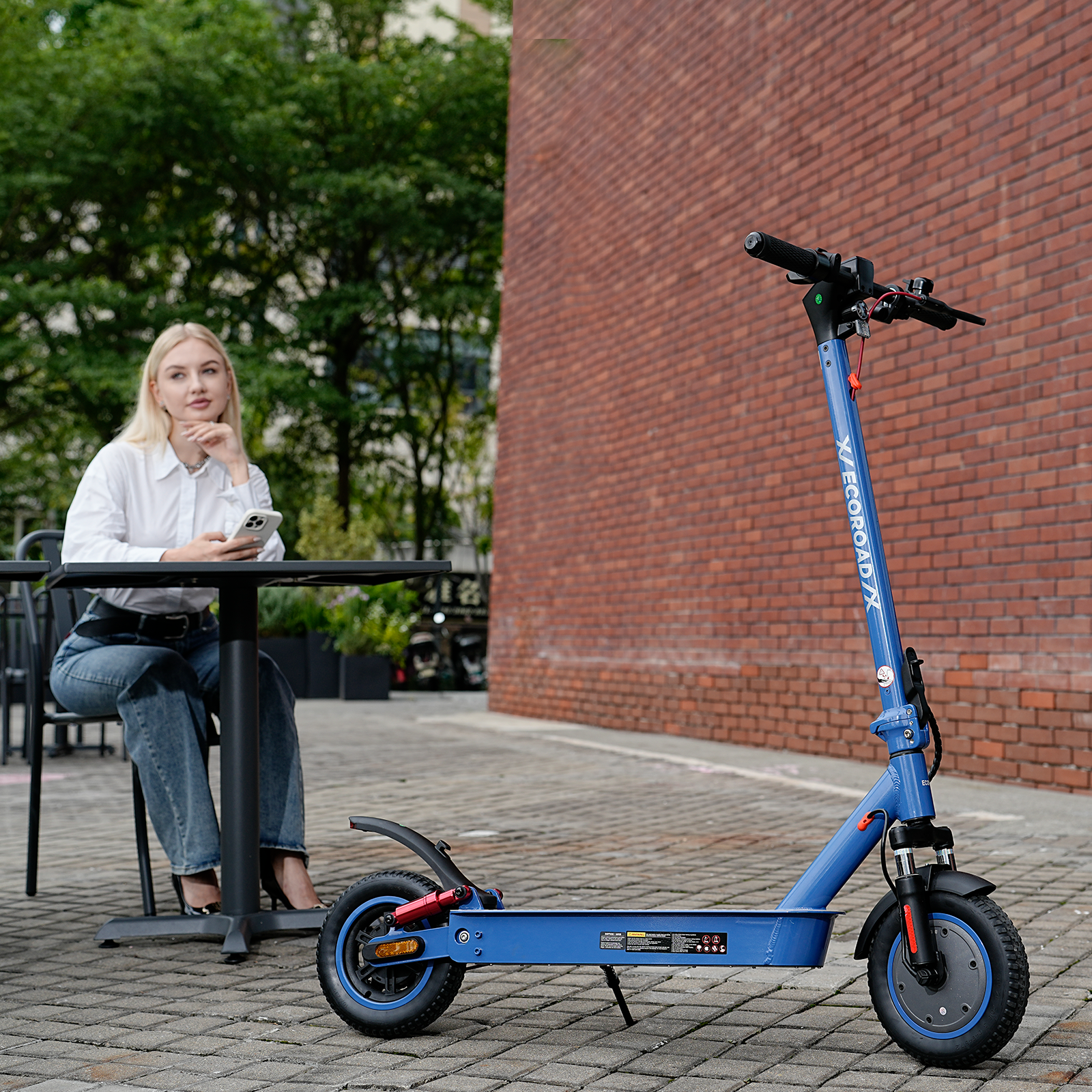
Leaving a scooter in direct sun can heat the battery before the ride even starts. The deck, display, grips, tires, and battery area can all become much warmer than the surrounding air.
At home, store the scooter indoors, in a shaded garage, or in a cooler storage area. At work, bring it inside if your building allows it. If you must park outside, choose shade and avoid leaving it on hot pavement for hours.
The ECOROAD EC10 Electric Scooter lists a 750W motor, up to 40 km/h top speed, up to 56 km range, 10-inch all-terrain tires, and a 120 kg max load. Those specs are useful for daily riding, but storage habits still affect long-term battery health.
Let the Battery Cool Before Charging
After a hot ride, wait before charging. The battery may already be warm from riding, hills, traffic, or direct sun. Charging immediately can add more stress.
A simple routine works well: finish the ride, park in shade, let the scooter cool, then charge. Charge indoors when possible. Use the original charger and avoid charging in direct sunlight, hot vehicles, balconies with full sun exposure, or poorly ventilated storage areas.
Avoid Running the Battery Too Low
In hot weather, try not to drain the battery completely on every ride. A battery buffer gives you more flexibility and reduces stress, especially if your route includes hills, wind, or rough pavement.
If your round trip is 25 km, do not choose a scooter that barely covers 25 km under ideal conditions. Heat, rider weight, speed, tire pressure, and stop-and-go traffic can all reduce real-world range.
For riders who need more range, the ECOROAD ES6 Electric Scooter lists a 1000W motor, up to 50 km/h top speed, up to 64 km range, 10-inch off-road tires, and a 150 kg max load. That extra range can make summer commuting easier because the battery is not being pushed to its limit every day.
Ride Smoothly to Save Battery
Smooth riding is one of the best ways to protect battery life in hot weather. Hard acceleration, high-speed riding, and repeated stop-start traffic use more energy and create more heat.
Start gently from stops. Use moderate speed settings in crowded areas. Keep a steady pace instead of constantly surging forward and braking. If you are climbing hills in Vancouver, Hamilton, Halifax, or Quebec City, avoid forcing the scooter at full power for long stretches.
This habit improves safety too. Smooth riding is easier for drivers, cyclists, and pedestrians to read.
Check Tire Pressure Often
.jpg?w=600&h=450)
Low tire pressure increases rolling resistance. That means the motor has to work harder, which can drain the battery faster and add heat to the system.
Check tire pressure regularly, especially if you ride daily. Follow the recommended range for your scooter. A tire can look fine and still be low, so use a gauge rather than guessing.
Choose Cooler and Smoother Routes
A smart summer route can reduce battery stress. Choose shade, smoother pavement, protected bike lanes, and fewer steep climbs when possible.
In Toronto, a calmer neighbourhood route may be better than an exposed major road. In Montreal, protected bike lanes can reduce stop-and-go stress. In Vancouver, greenways may be better than steep traffic-heavy streets on hot afternoons. In Ottawa, pathway crowds and direct sun can affect how efficiently you ride.
Watch for Overheating Signs
An overheated battery or scooter may show reduced acceleration, lower range, power limiting, error warnings, or delayed charging. If the scooter feels unusually hot or weak, stop riding and move it to shade.
Turn it off and let it cool naturally. Do not charge it right away. Do not spray it with water. Do not keep riding uphill because you are almost home. That is how a small warning becomes a larger problem with excellent timing and terrible manners.
Match the Scooter to Your Summer Commute
Battery care is easier when your scooter is not constantly pushed to its limit. If your route includes hills, rough roads, longer distances, and hot weather, choose a scooter with enough power and range.
The ECOROAD EC9 Electric Scooter lists a 500W motor, up to 35 km/h top speed, up to 50 km range, and a 120 kg max load. It can suit lighter city rides.
For more demanding routes, the ECOROAD ES4 Electric Scooter lists an 800W motor, up to 40 km/h top speed, up to 56 km range, 8.5-inch off-road tires, dual suspension, and a 150 kg max load.
Choose based on your real route, not only the range number on a perfect-weather product page.
Keep Maintenance Part of Battery Care
A scooter with poor maintenance uses more battery. Dragging brakes, underinflated tires, loose hardware, worn tires, or dirty parts can all reduce efficiency.
Before regular summer rides, check tire pressure, brake response, lights, folding latch, battery level, and any unusual noises.
A well-maintained scooter has an easier job. The battery appreciates not being asked to compensate for everything.
Keep the Battery Cooler, Longer
Electric scooter battery care in hot weather comes down to steady habits. Store the scooter out of direct sun, let it cool before charging, avoid draining it completely, check tire pressure, ride smoothly, and choose routes that reduce strain.
These small habits help protect range, battery health, and summer ride quality. The goal is simple: keep the scooter reliable enough that warm-weather commuting feels easy instead of dramatic.
What Hot-Weather Riders Usually Ask
Can hot weather damage an electric scooter battery?
Yes. Extreme heat can affect performance and long-term battery health, especially when the scooter is stored or charged in direct sun.
Should I charge my scooter right after a hot ride?
No. Let the scooter cool first, especially after a long ride, hill climb, or hot commute.
Does heat reduce electric scooter range?
It can. Range also depends on speed, hills, rider weight, tire pressure, wind, and stop-and-go riding.
Where should I store my scooter during summer?
Store it indoors, in shade, or in a cool dry area. Avoid direct sun, hot vehicles, and sun-baked pavement.
What should I do if the battery feels too hot?
Stop riding, turn the scooter off, move it to shade, and let it cool naturally before charging or riding again.