
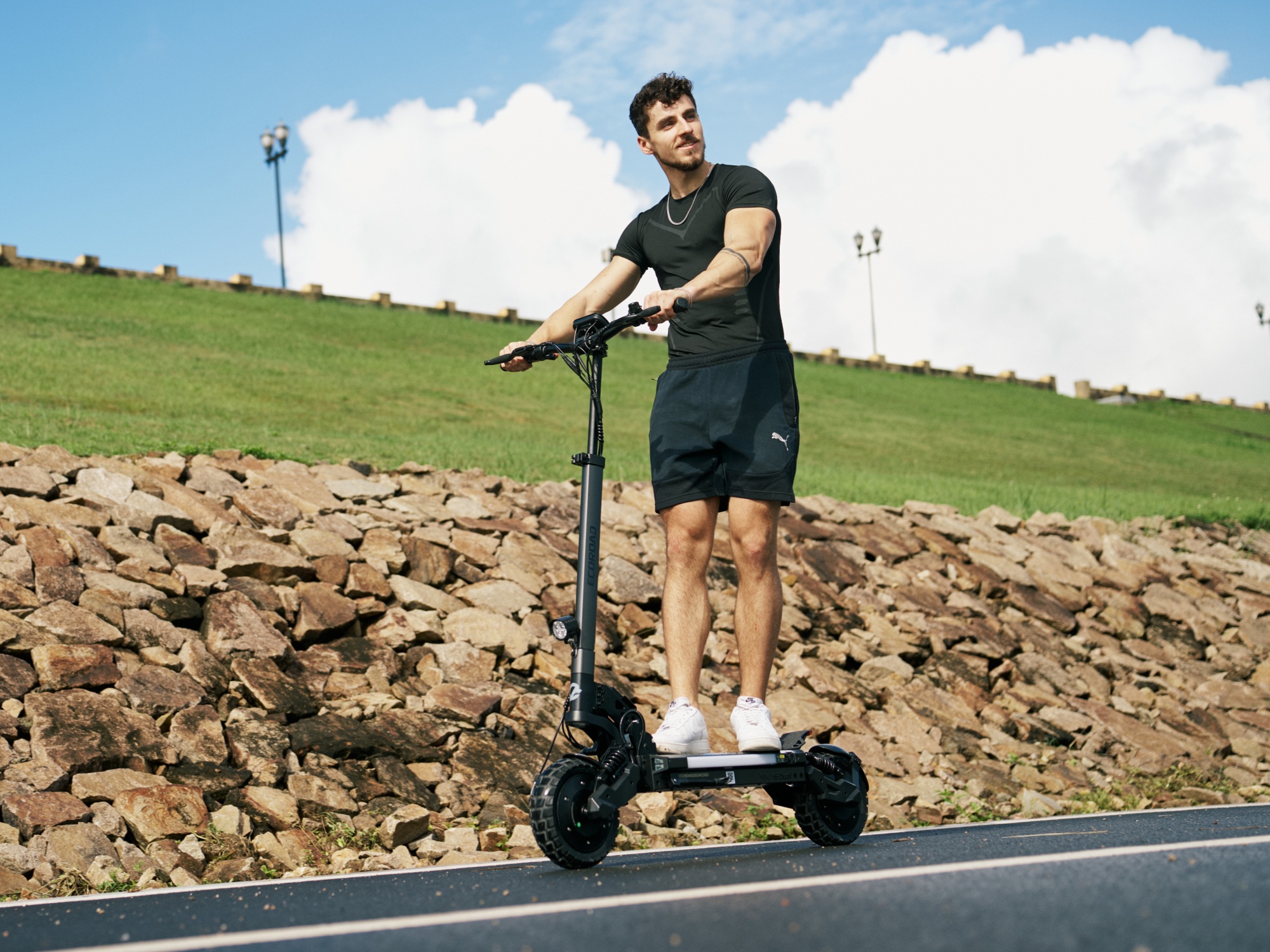
Your Commute Shouldn't Beat You Up
If your ride to class ends with sore wrists and a stiff back, the answer is simple: an electric scooter with suspension changes how every bump feels under your feet. Suspension absorbs shock before it reaches your hands and spine, turning a jarring ride into a smooth one. For students crossing quads, parking lots, and older streets every day, that difference adds up over a semester, which is exactly why more riders are shopping for an electric scooter for campus use instead of a basic commuter model.
What Suspension Actually Does
Suspension is the system of springs or shock absorbers built into a scooter's frame and wheels. When the front or rear wheel hits a crack or a bump, the suspension compresses and releases instead of sending that jolt straight into the deck. On a rigid scooter, every pebble and pothole travels directly through your legs. On an electric scooter with suspension, that same bump gets softened before it reaches you.
This matters more than people expect. A short ride across campus might only take ten minutes, but if that ride includes dozens of small impacts, your body absorbs all of it. Suspension spreads that impact out, so your joints and grip aren't taking the full hit every time.
Common Campus Road Conditions
College campuses are rarely as smooth as they look in the brochure. Walk or ride around a school like UBC or the University of Toronto, and you'll notice a mix of surfaces: aging asphalt, brick paths between buildings, painted crosswalks, and speed bumps near loading zones. Add cracked sidewalks from decades of tree roots and freeze-thaw cycles, and you get a route that's anything but flat.
Most riders deal with a mix of cracked sidewalks near older academic buildings, brick or cobblestone paths through historic quads, and speed bumps in parking structures and drop-off zones, along with potholes on access roads shared with maintenance vehicles and uneven transitions between sidewalk, curb, and street.
None of these are dangerous on their own, but ride over them daily on a rigid scooter, and your hands and forearms will feel it. A commuter electric scooter built with some give in the frame handles these conditions with far less fatigue.
Hilly campuses raise the stakes even more. Schools built on slopes need a hill-climbing electric scooter that can handle both the incline and the rough patches on the way up. Looking for the best electric scooter for steep hills usually means looking for stronger motor torque paired with suspension that keeps the wheels planted as the terrain changes underfoot.
Front vs Dual Suspension
.jpg?w=600&h=450)
Not all suspension setups are built the same way. Front suspension only cushions the front wheel, which helps with the initial impact when you roll over a crack or curb but leaves the rear wheel and your lower back exposed to bumps. Dual suspension cushions both wheels, spreading the impact more evenly across the whole ride.
For flatter routes with the occasional crack or seam, front suspension alone can feel like plenty. For campuses with brick paths, speed bumps, and longer stretches of uneven pavement, dual suspension tends to feel noticeably smoother, especially on a scooter you're riding multiple times a day. Either way, an electric scooter with suspension in some form beats a fully rigid deck for daily campus use.
Choosing the Right Scooter
Picking the right ride comes down to your route, your budget, and how far you're commuting. The EC10 ($629.99 CAD) is a solid entry point for students who want a lightweight, foldable commuter electric scooter for campus without stretching their budget. The ES4 ($649.99 CAD) steps things up with dual suspension, which makes it a strong pick for anyone riding over brick paths or cracked sidewalks on a regular basis.
If your route includes real hills, the ES6 ($749.99 CAD) brings more motor power for climbing, making it a practical hill-climbing electric scooter and a strong commuter electric scooter for students on sloped campuses. The ET6 ($699.99 CAD) is another option worth comparing, offering a longer range for students who live off campus or commute from further out. Whichever model you choose, look for a durable electric scooter with a frame built to handle daily wear, not just occasional weekend rides.
Riders who want more background on comparing models before buying might find it useful to read through our guide on why the ECOROAD ET6 is a smart choice for daily commutes, or check out our article on how to choose an electric scooter for commuting for a side-by-side look at range, weight, and portability.
Smoother Rides Start With the Right Setup
A rough commute isn't something you have to accept just because your campus wasn't built with scooters in mind. Whether your route crosses brick quads, cracked sidewalks, or a few unavoidable hills, choosing an electric scooter with suspension is one of the simplest ways to make daily rides more comfortable. Match the suspension type and motor power to your actual route, and the ride to class stops being something you dread.
What Campus Riders Want to Know
Does suspension slow down an electric scooter?
No, suspension affects ride comfort, not top speed, since it only cushions impacts rather than changing motor output.
Is dual suspension worth it for a flat campus?
If your campus is mostly flat and smooth, front suspension alone is usually enough, and dual suspension becomes more valuable once brick paths or speed bumps enter the picture.
Can a suspension scooter still fold for storage?
Yes, models like the EC10 and ES4 are built to fold down for dorm rooms and lockers despite having suspension built in.
How do I know if a scooter can handle hills on my campus?
Check the motor wattage and climbing angle listed on the product page, since a higher-torque motor paired with suspension handles slopes more comfortably than a basic commuter model.
Does riding on rough roads wear out a scooter faster?
Regular impacts can add wear over time, which is why a durable build with good suspension tends to hold up better on campuses with cracked sidewalks or uneven roads.