
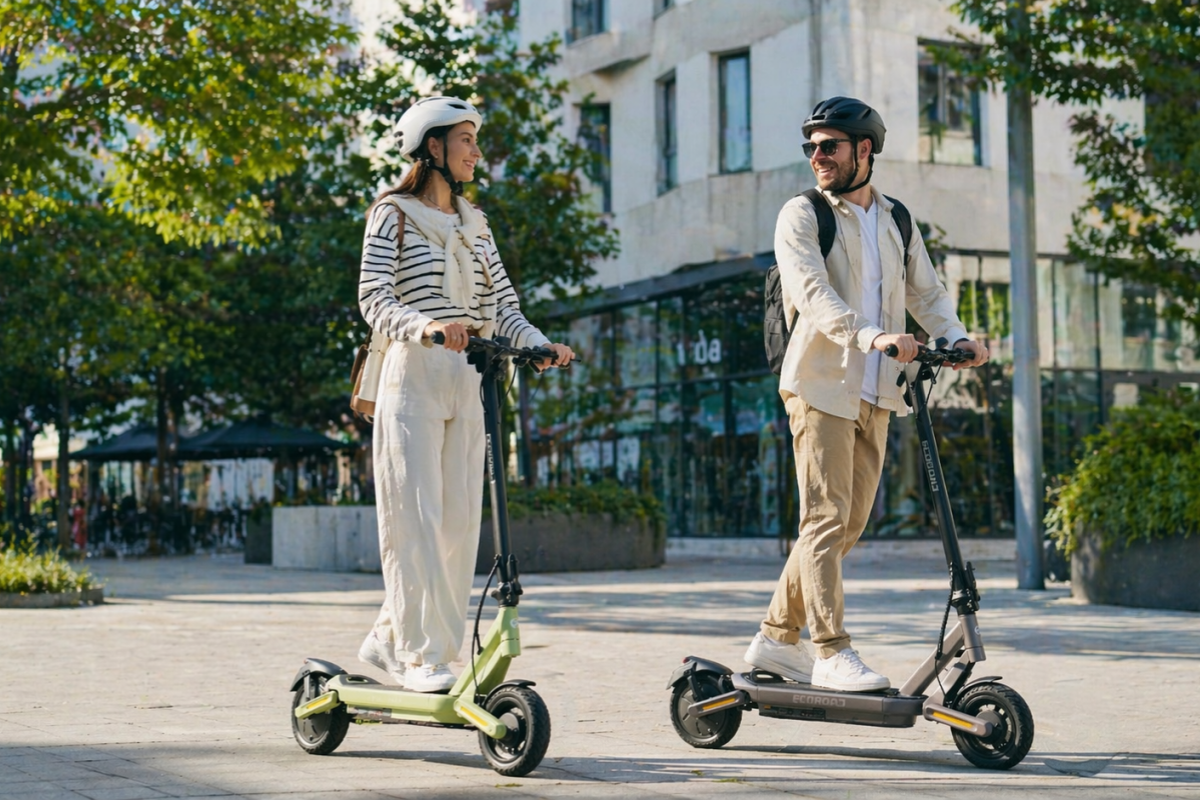
Start With Space and Patience
The safest way to ride an electric scooter around pedestrians is to slow down before you reach them, give plenty of space, communicate clearly, and follow local rules for sidewalks, paths, and bike lanes. Pedestrians are more vulnerable than scooter riders, so the rider has the responsibility to stay predictable and controlled.
This matters in cities like Toronto, Vancouver, Montreal, Ottawa, Calgary, Halifax, Victoria, and Quebec City, where summer paths, waterfront routes, campuses, and downtown streets can get crowded quickly. A scooter may feel quiet and easy to control to the rider, but to a pedestrian, a close pass can feel sudden and unsafe.
Good shared-space riding is not about being timid. It is about being readable.
Check Local Rules Before Riding
Electric scooter rules vary across provinces and municipalities. Some cities allow e-scooters only under pilot programs. Others restrict where scooters can operate. Sidewalk riding is often limited or prohibited, especially in busy pedestrian areas.
Before riding, check the rules for your city, park, campus, or path. A scooter may be allowed in one place and restricted in another. A multi-use trail, bike lane, sidewalk, waterfront path, and downtown street can all have different expectations.
If a route is unclear, choose the safer option: bike lanes, quieter roads, or walking the scooter through crowded pedestrian areas.
Slow Down Before You Reach People
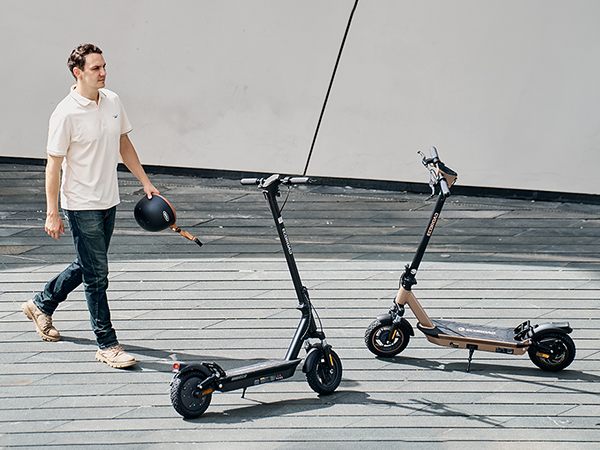
Do not wait until you are beside pedestrians to reduce speed. Slow down early, especially near crosswalks, benches, patios, transit stops, school areas, waterfront paths, and park entrances.
On shared paths, ride at a speed that lets you stop if someone steps sideways. This is especially important on busy routes like Vancouver’s Seawall, Toronto’s waterfront paths, Montreal’s Lachine Canal, Ottawa’s canal pathways, and popular park trails.
The ECOROAD EC10 Electric Scooter, listed with a 750W motor, up to 40 km/h top speed, up to 56 km range, 10-inch all-terrain tires, and a 120 kg max load, can support daily commuting. Around pedestrians, though, speed should be reduced well below what the scooter can do.
Pass Clearly and Give Room
A safe pass should never surprise the person being passed. Use a bell or calm voice before passing. Give a clear cue like “passing on your left,” then wait long enough for the person to respond.
If the path is narrow, crowded, or blocked, do not squeeze through. Wait for a safer opening. Passing between people in a group is especially risky because someone may move sideways without noticing you.
A few good passing habits:
-
Slow before you pass.
-
Give a friendly warning early.
-
Leave a wide gap.
-
Avoid passing near blind corners.
-
Do not pass between children or groups.
If someone does not hear you, slow down and wait. The extra few seconds will not ruin the ride. It may even improve your blood pressure, which is a tidy bonus.
Be Careful Around Children, Dogs, and Tourists
Children and dogs are unpredictable. So are tourists reading signs, people taking photos, and groups spreading across a path. When you see any of these, reduce speed and prepare to stop.
Dogs may cross suddenly or stretch a leash across the path. Children may run sideways without warning. Visitors may not know local path flow. None of this is unusual, so riders should expect it.
On busy routes in Stanley Park, High Park, the Halifax waterfront, Old Montreal, or around university campuses, pedestrian movement can be irregular. Ride as if people might do something unexpected, because sometimes they absolutely will.
Treat Sidewalks as Pedestrian Space
If sidewalk riding is not allowed where you are, do not ride there. If it is allowed, ride very slowly and yield to pedestrians at all times.
Sidewalks are designed for walking, not fast scooter travel. They have shop entrances, driveways, bus stops, signs, patios, strollers, and people moving at different speeds. Even a capable scooter can become a problem if ridden too quickly in that environment.
For commuting, choose legal bike lanes, lower-speed streets, or shared paths where scooters are permitted.
Slow Down at Crosswalks and Intersections
Crosswalks belong to pedestrians first. Slow down near crossings, curb cuts, driveways, transit stops, and intersections. People may appear from behind buses, parked vehicles, planters, storefronts, or other pedestrians.
If local rules require you to dismount at crossings, do that. If not, still cross slowly and predictably. Avoid cutting in front of walkers to save a few seconds.
Intersections are already busy enough. Do not add surprise scooter energy to the mix.
Use Brakes Smoothly and Keep Them Maintained
Pedestrian-heavy riding depends on controlled braking. Sudden stops can cause skids or surprise people around you. Smooth braking gives everyone more time to react.
Before riding, test the brakes and make sure the scooter responds properly. ECOROAD’s article on why brakes are the most important feature on an electric scooter is useful here because braking quality affects safety in shared spaces.
The ECOROAD ES4 Electric Scooter, listed with an 800W motor, up to 40 km/h top speed, up to 56 km range, 8.5-inch off-road tires, dual suspension, and a 150 kg max load, can support rougher city riding. But even with good hardware, riders need smooth braking habits near pedestrians.
Use Lights and Stay Visible
Even during the day, visibility matters. Pedestrians may not hear a scooter approaching, especially near traffic, music, construction, or crowds. Lights and visible clothing help people notice you sooner.
At dusk or night, use front and rear lights. Avoid riding too close behind people. If someone suddenly stops or turns, you need space to react.
Choose a Scooter That Feels Controllable
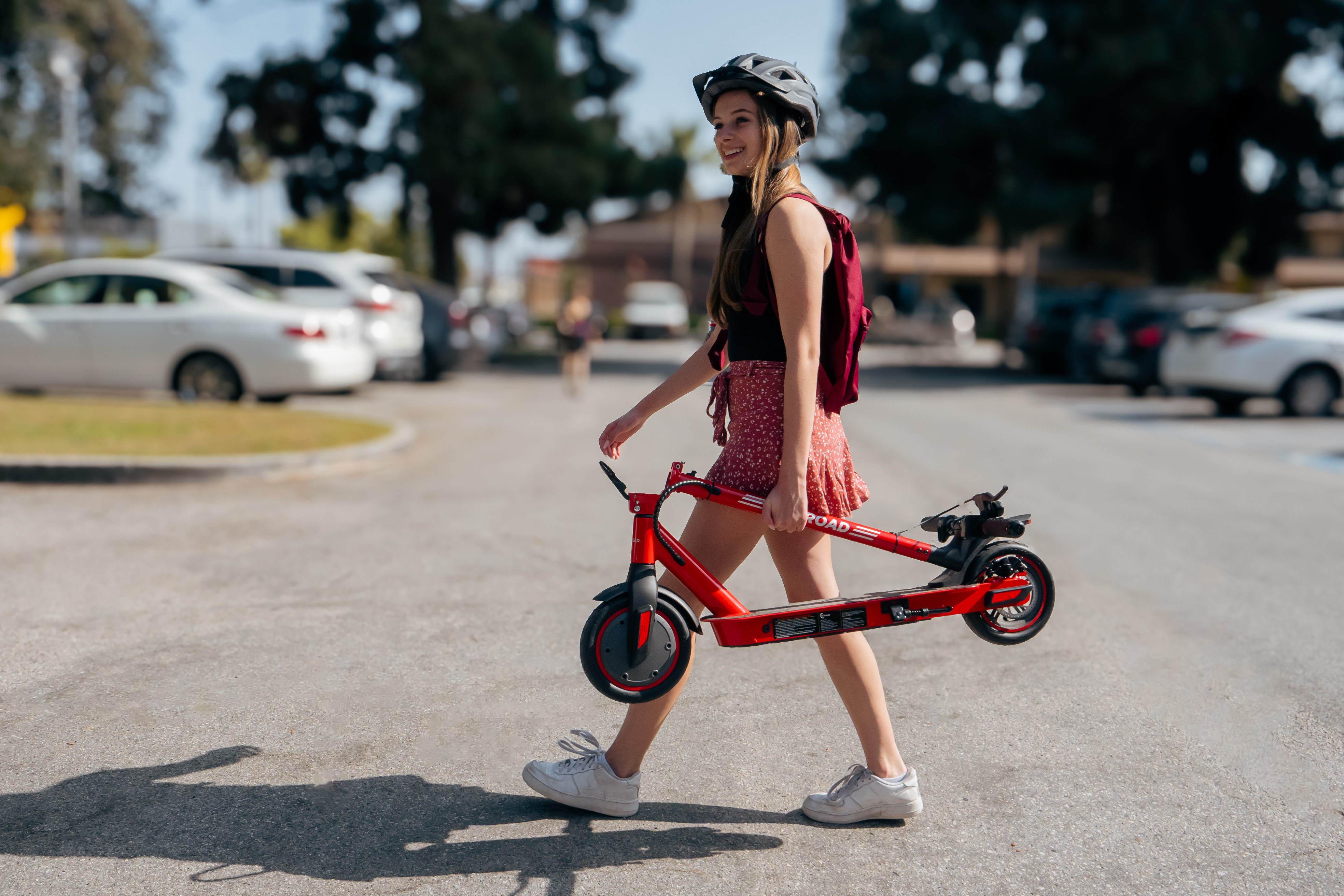
If your route includes shared paths, campuses, parks, and downtown areas, choose a scooter that feels stable at low speeds. Range and power are useful, but pedestrian safety depends on control.
The ECOROAD EC9 Electric Scooter, listed with a 500W motor, up to 35 km/h top speed, up to 50 km range, and a 120 kg max load, can fit lighter daily riding. For longer or more demanding routes, the ECOROAD ES6 Electric Scooter, listed with a 1000W motor, up to 50 km/h top speed, up to 64 km range, 10-inch off-road tires, and a 150 kg max load, offers more power and range.
More capability is helpful, but it should not turn into more speed around people.
Keep the Scooter Ready to Respond
A poorly maintained scooter is harder to control. Low tire pressure, weak brakes, loose folding parts, worn tires, or faulty lights can all become safety issues near pedestrians.
Before regular rides, check tires, brakes, lights, battery level, throttle response, and the folding latch. Maintenance is not exciting, but neither is discovering weak brakes while approaching a busy crosswalk.
Know When to Walk the Scooter
Sometimes the safest riding choice is not riding. If a sidewalk, path, event area, park entrance, or market street is too crowded, step off and walk.
This is common around festivals, waterfront areas, transit stations, campuses, and busy downtown blocks. Walking the scooter for a short stretch can prevent conflicts and keep the rest of the ride smoother.
Good scooter etiquette is not about giving up space. It is about using space well.
Shared Paths Work Better With Better Riders
Riding an e-scooter safely around pedestrians comes down to speed, space, communication, legal route choice, and awareness. Slow down early, pass clearly, give room to children and dogs, follow local rules, and walk the scooter when the area is too crowded.
Pedestrians should not feel like obstacles in a rider’s way. When scooter riders act predictably and respectfully, shared paths become safer and more comfortable for everyone.
What Shared-Space Riders Usually Ask
Can I ride an electric scooter on the sidewalk?
It depends on local rules. Many municipalities restrict sidewalk riding, especially in busy areas. Check city bylaws before riding.
How fast should I ride near pedestrians?
Ride slowly enough to stop quickly. On crowded shared paths, that may mean near walking speed.
Should I use a bell around pedestrians?
Yes. Use a bell or calm voice early, not at the last second. Give people time to react.
Are electric scooters allowed on shared paths?
Sometimes. Rules vary by city, park, and path type, so check local signs and regulations.
What should I do if the path is crowded?
Slow down or walk the scooter until the area opens up. Crowded pedestrian spaces are not the place to squeeze through.