
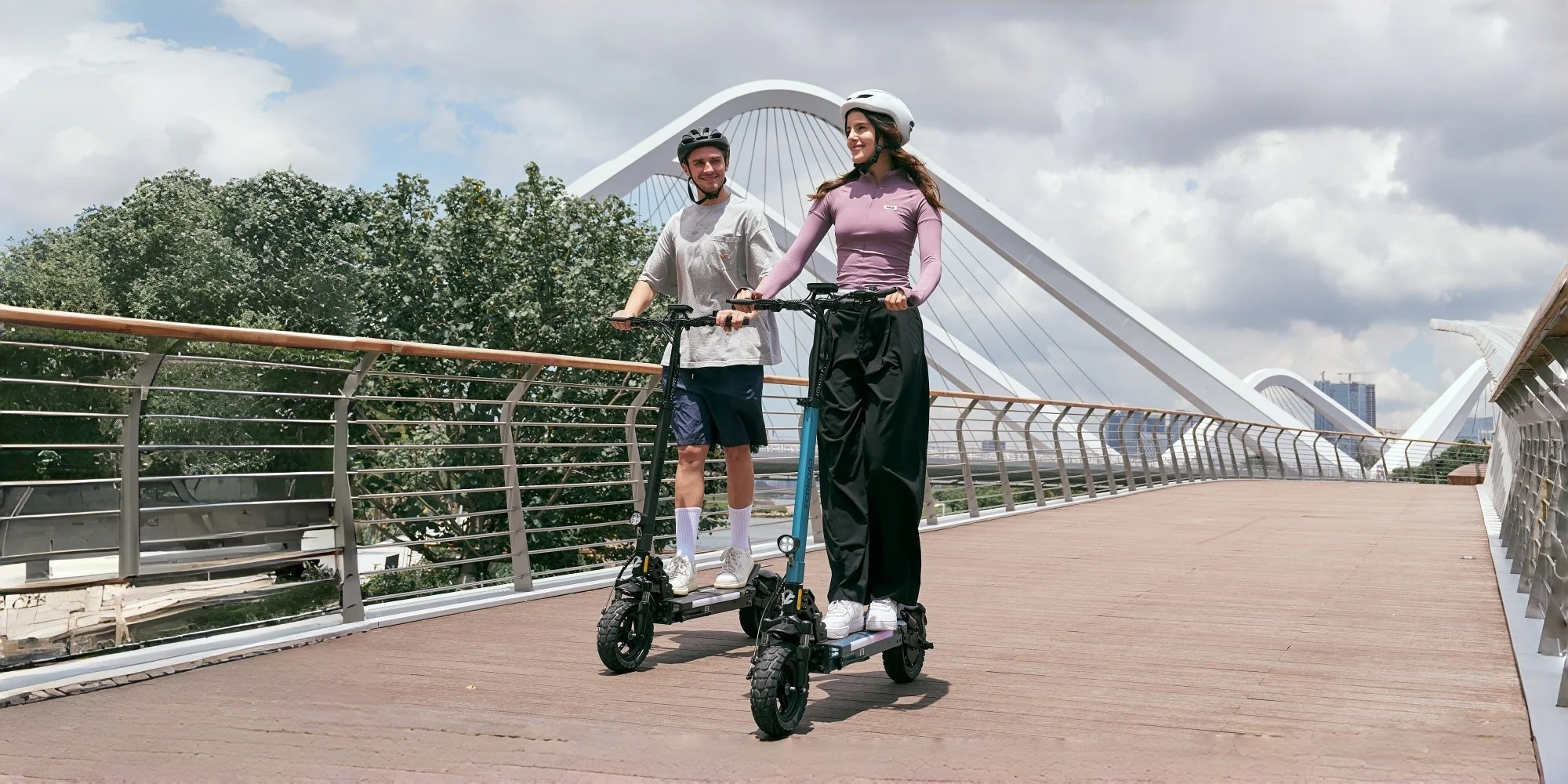
Start Here. This Is How to Choose an Electric Scooter
To choose an electric scooter, answer four questions first: How far is your daily ride? What kind of surfaces will you ride on? How often will you carry the scooter? And what's your honest budget? The answers to those four questions narrow the field faster than any spec comparison will. Everything in this electric scooter buying guide flows from those four decisions: motor power, range, tire type, and weight. They all become obvious once your actual use case is clear.
Range: How Much Do You Actually Need?
Range anxiety is real, but most buyers overbuy range and underbuy the features that actually affect daily riding comfort. Here's a practical breakdown for commuters:
Under 25 km round-trip per day: Any ECOROAD model covers this. The EC10 (56 km range) gives you 2+ days of typical commuting on a single charge and plenty of buffers without paying for a range you won't use.
25-40 km per day: The ET6 (55 km range) is the sweet spot here. Its self-healing tires and 800W motor handle this distance reliably as a daily tool for commuters in cities like Toronto, Ottawa, or Calgary.
40+ km per day or multi-stop routes: The ES6 (64 km range, 1000W) and the ES6 Dual (80 km, 2000W dual motor) lead the lineup on performance, both covering demanding daily distances without requiring mid-day charging.
Real-world range is always lower than the rated figure, typically 20-25% lower depending on rider weight, terrain, speed, and temperature.
In winters, expect an additional 15-20% reduction in cold conditions. Build both buffers into your calculation from the start.
Motor Power. Match It to Your Terrain
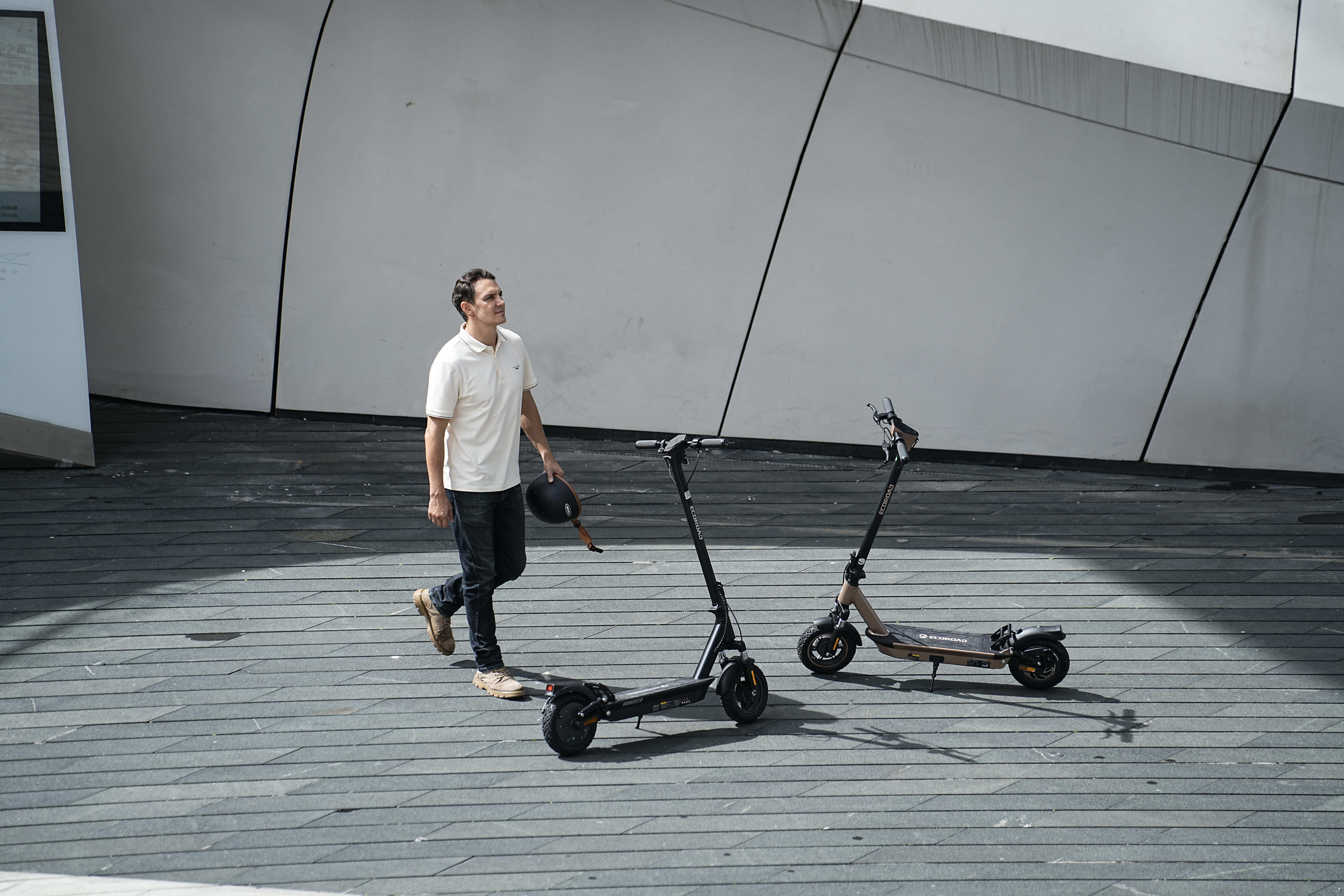
Motor wattage matters less on flat pavement and more on hills, rough surfaces, and heavier rider weights. Here's the honest breakdown for choosing an e-scooter by terrain:
Higher wattage on flat terrain just means faster battery drain and higher cost, not a better ride.
Tires: The Spec That Changes the Ride Most
Tire choice is the most underrated buying decision for new e-scooter riders. It affects comfort, traction, and maintenance more than almost any other spec, and in various weather conditions, the difference is more pronounced than in milder climates.
Solid tires (like those on the EC9) are puncture-proof and require zero maintenance. The trade-off is a firmer ride that transfers road irregularity directly to the rider. On smooth pavement, barely noticeable. On typical city streets that are potholed from frost-thaw cycles in cities like Winnipeg, Ottawa, or Montreal, it adds up significantly over a commute.
Pneumatic (air-filled) tires absorb impact through air compression. The EC10, ES4, and ES6 all run pneumatic tires. They require pressure checks and can puncture, though the self-healing option (ET6) reduces that concern significantly. In cold winters, always check tire pressure before riding because cold air contracts and tire pressure drops noticeably overnight.
8.5-inch off-road pneumatic tires (ES4, ES6) add traction and shock absorption for mixed surfaces. These are the right choice for any rider whose route includes anything beyond smooth pavement — and in most cities, that's most riders.
Weight and Portability (Be Honest About How You'll Use It)
The scooter you'll actually ride every day is the one that's easy to use in your real routine, not just on good days.
If you carry the scooter up stairs, onto the TTC, STM, or TransLink, or through building lobbies regularly, weight matters enormously. The EC10 at approximately 20 kg and the ES4 at approximately 22 kg are among the lightest adult models in the lineup.
If you mostly ride door-to-door without frequent carrying, weight is secondary to range and comfort. The ES6 is heavier than the EC10 but delivers noticeably better real-world performance for riders who stay on the scooter rather than carrying it.
For anyone solving the "last mile" transit problem, such as riding to a subway station, folding the scooter, and carrying it on board, the compact folded dimensions and lighter weight of the EC10 and ES4 are specifically practical.
Best Electric Scooter for Beginners: Where to Start
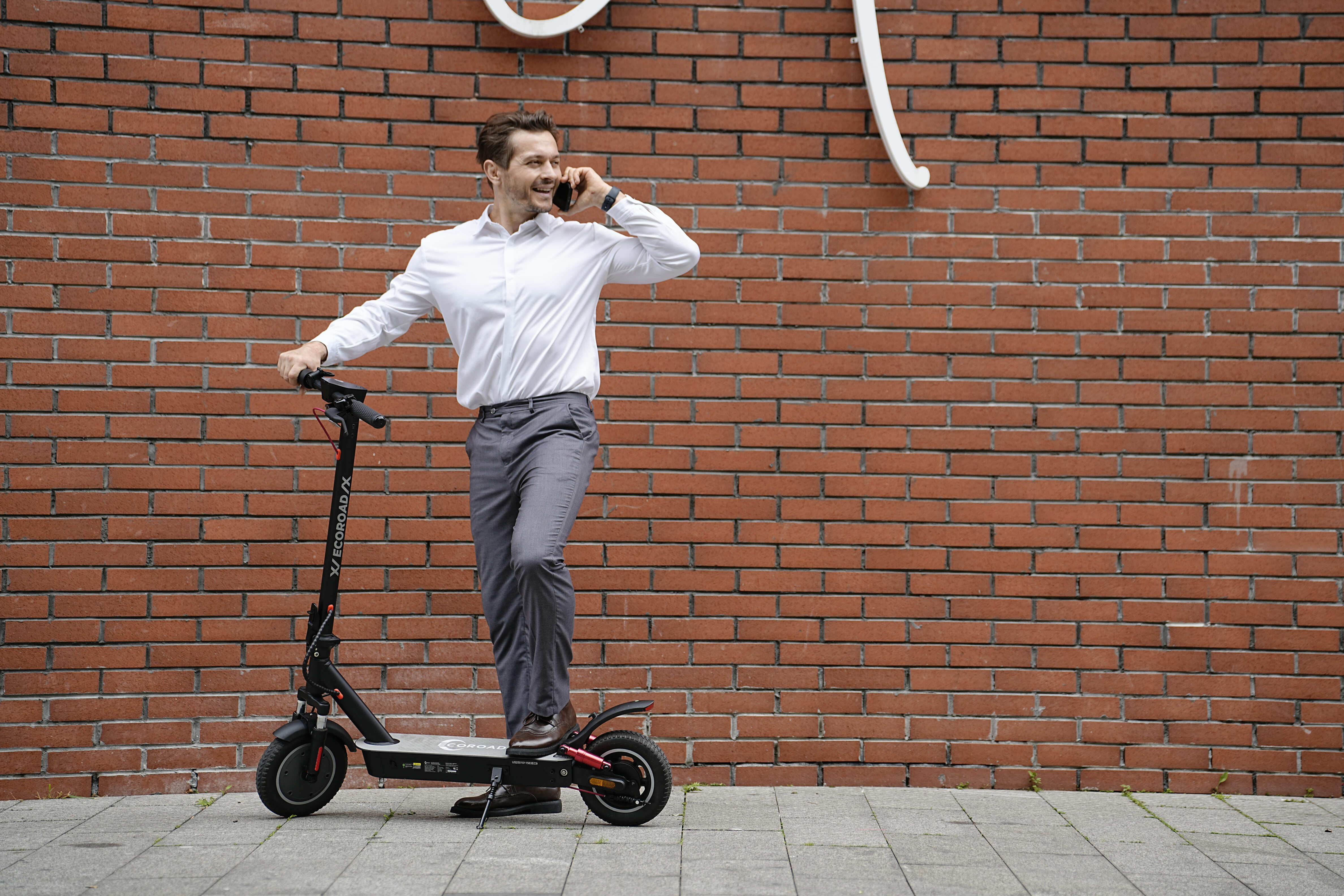
If you're new to e-scooters, the decision comes down to confidence and fit, not maximum specs.
The EC10 is the most practical recommendation for first-time adult riders. Four speed modes let you start slowly and build gradually, the range covers most daily routes, and the 10-inch pneumatic tires handle real city terrain without requiring advanced technique. It's forgiving without being underpowered and at a price point that makes sense for riders still determining how much they'll actually ride.
For a beginner who wants slightly more capability from day one, particularly for the frost-heaved pavement and variable surfaces common in cities, the ES4 adds 8.5-inch off-road tires and an 800W motor at the same price tier.
A Quick Comparison at a Glance
|
Model |
Range |
Motor |
Best For |
|
50 km |
500W |
Budget commuter, smooth roads |
|
|
56 km |
750W |
Beginner adult, city riding |
|
|
56 km |
800W |
Mixed terrain, light off-road |
|
|
64 km |
1000W |
Hills, varied terrain |
|
|
80 km |
2000W |
Performance, off-road, all-conditions |
The Right Scooter Is the One You'll Actually Ride
The best e-scooter buying guide ends the same way every time: with a recommendation that matches your actual life, not the most impressive spec sheet. Choose the range that covers your real daily distance, the tire type that matches your real streets, and the weight you can actually manage in your actual routine. That scooter will still be in use two years from now. The one you bought for the specs you thought you needed might not.
Browse the full ECOROAD lineup to compare every model side by side.
What E-Scooter Riders Want to Know
How do I know if a scooter's range is enough for my commute?
Take your round-trip daily distance, add 25-30% for real-world conditions and an additional 15-20% for winter cold, and ensure the model's rated range comfortably exceeds that combined total.
Is a 500W motor enough for city riding?
For flat urban streets and moderate speeds, yes. The EC9's 500W motor handles smooth city riding; for hills, frost-heaved pavement, or consistent rough terrain, 800W or higher makes a noticeable difference.
What's the most important feature for a beginner rider?
Multiple speed modes since it gives the ability to start at a lower speed and progress gradually is more valuable for building safe riding habits than any other single feature.
Do pneumatic tires really make that much difference over solid tires?
More than in milder climates — city streets with frost-heave cracking, patched asphalt, and variable winter conditions make the comfort and traction benefits of pneumatic tires significantly more noticeable than on smooth pavement.
How does winter affect my electric scooter choice?
Cold temperatures reduce battery range by 15-20% and affect tire pressure; choose a model with a larger battery than your minimum range requirement to account for this, and always bring the battery to room temperature before charging in cold weather.