
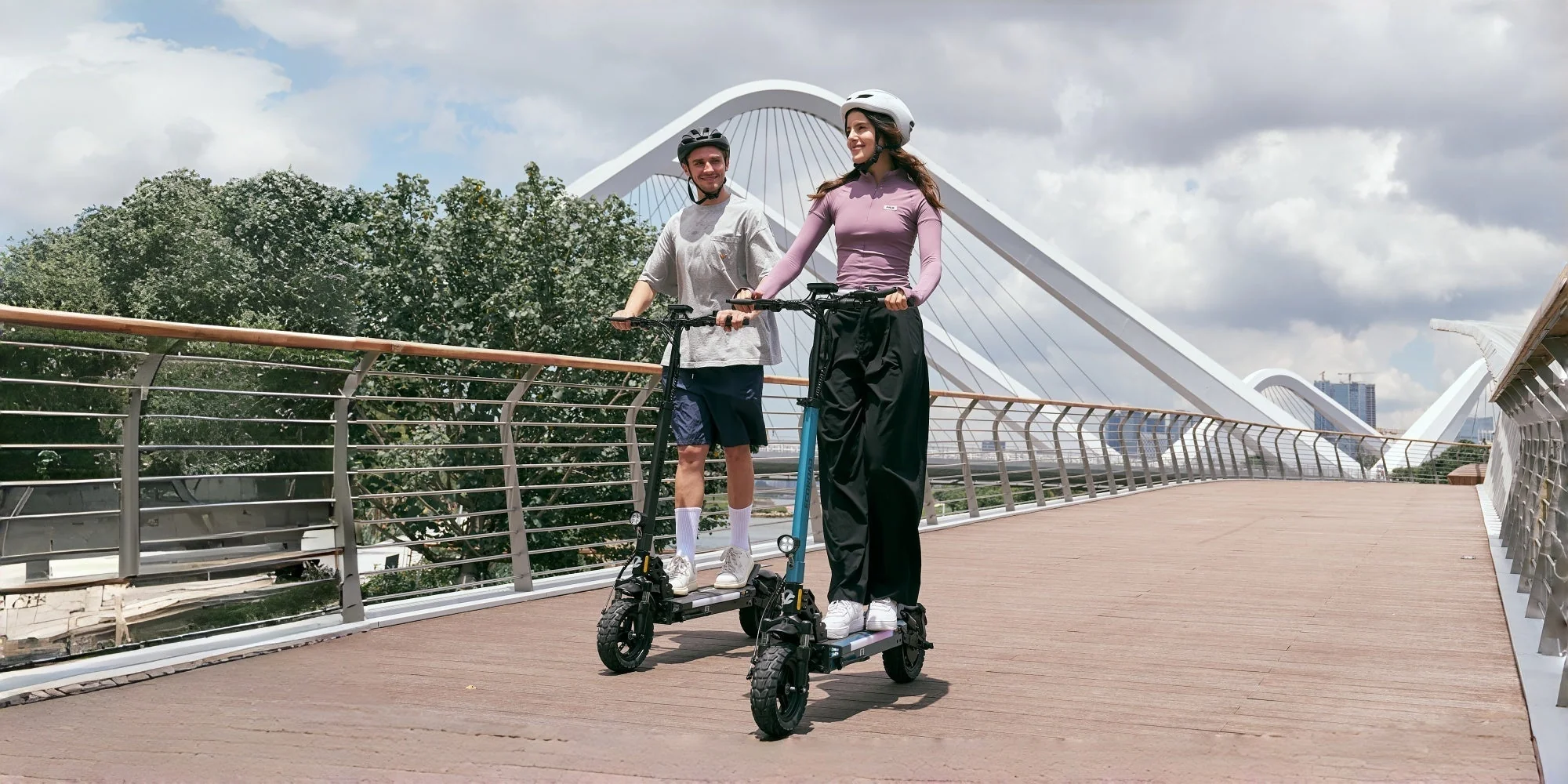
Smarter City Commuting Starts with the Right Plan
The best way to commute with an electric scooter in a city is to plan around distance, weather, local bylaws, safe routes, and battery range. A scooter can be ideal for downtown trips, campus travel, last-mile transit connections, and short errands where driving feels excessive.
For riders, the ECOROAD electric scooter lineup includes commuter-focused options with specs listed in kilometers, km/h, and kilograms.
Choose Calm, Predictable Streets
In Toronto, Vancouver, Montreal, Calgary, Ottawa, and other busy cities, the best scooter route is rarely the most direct one. Look for bike lanes, multi-use paths where permitted, slower streets, and smoother pavement.
A good commute route should have:
-
Lower vehicle speeds: Streets around 30-40 km/h usually feel calmer.
-
Fewer major intersections: Less crossing traffic means fewer surprises.
-
Smooth pavement: Cracks, potholes, and streetcar tracks can unsettle small wheels.
-
Good lighting: Important during darker winter mornings and evenings.
-
Transit access: A scooter works well for getting to SkyTrain, TTC, STM, GO, or bus stops.
If you are still comparing route styles, ECOROAD’s broader News blog has useful scooter safety and commuting articles.
Know Your Daily Distance in Kilometers
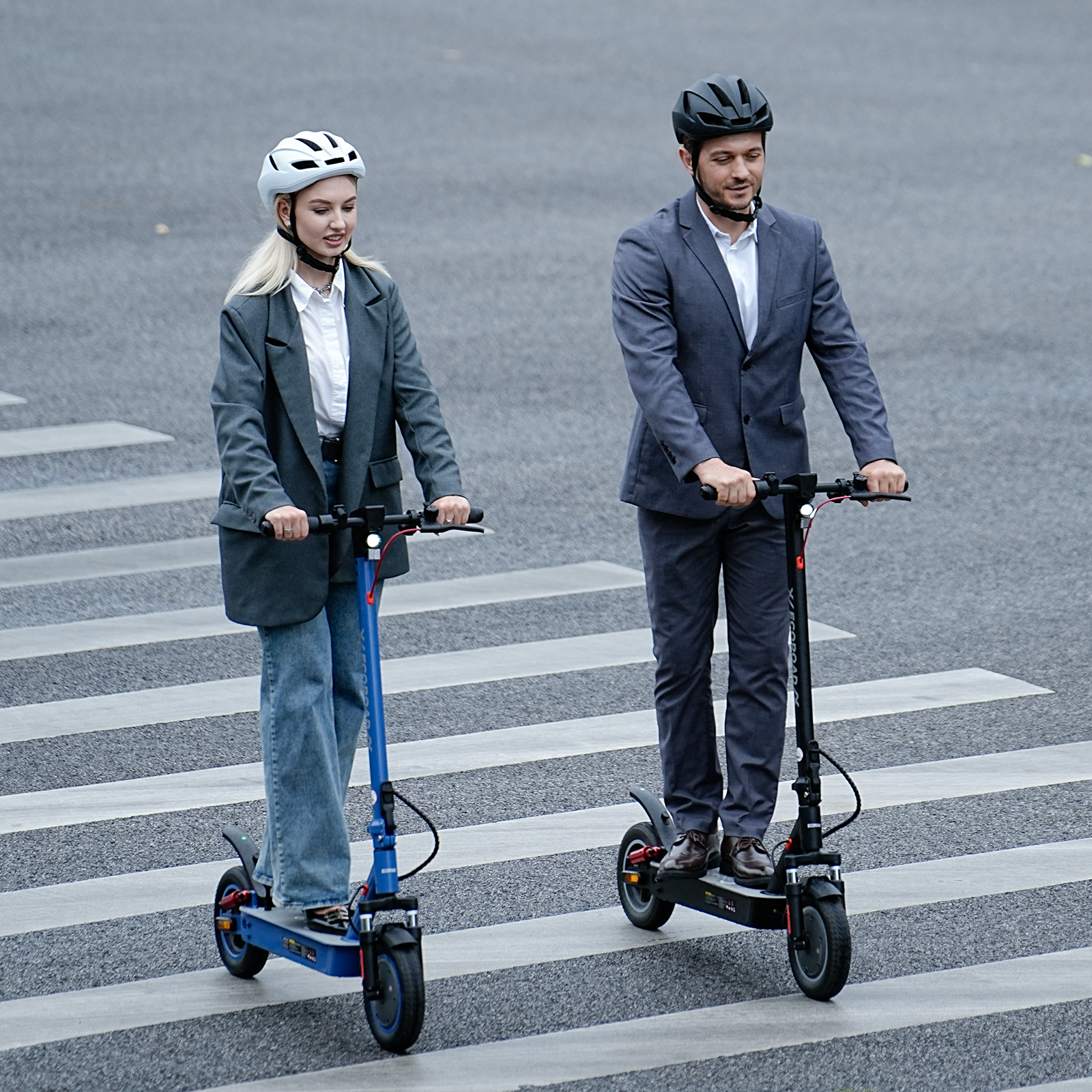
Most scooter commutes are easier to manage when you know the round-trip distance, not just the one-way distance. A 7 km ride to work is really 14 km per day, plus any errands or detours.
Leave at least 20% battery at the end of the day. The weather makes that especially important because cold temperatures can reduce battery performance.
For lighter city commuting, the ECOROAD EC8 Electric Scooter lists up to 34 km of range. For longer daily rides, the ECOROAD EC10 Electric Scooter lists up to 56 km, which gives more room for detours and mixed terrain.
Follow Local Rules Before You Build the Habit
Electric scooter rules vary by province and municipality. Some cities allow personal e-scooters under specific pilot programs, while others restrict where they can be used. Rules may cover speed limits, helmets, age requirements, sidewalks, bike lanes, paths, lights, and parking.
Before commuting regularly, check your city’s current e-scooter rules. Do not assume that what works in Vancouver applies in Toronto, or that a shared scooter rule applies to a privately owned scooter.
Ride Defensively in Traffic
City riding demands full attention. Drivers may misjudge your speed. Pedestrians may step into bike lanes. Delivery vehicles may stop suddenly.
Use these habits every ride:
-
Slow down before crossings: Intersections are where most conflicts happen.
-
Stay away from parked car doors: Leave space whenever the lane allows.
-
Avoid truck and bus blind spots: If you cannot see the driver, assume they cannot see you.
-
Signal early: Hand signals help drivers, cyclists, and pedestrians read your next move.
-
Brake before turning: Hard braking mid-turn is riskier, especially in rain.
For safety-focused buying decisions, ECOROAD’s article on why scooter brakes matter is directly relevant.
Pick a Scooter That Fits Streets
City streets are not always smooth. Freeze-thaw cracks, construction plates, wet leaves, gravel, and uneven paths can make comfort and control more important than speed.
The ECOROAD EC9 Electric Scooter lists a 50 km max range and 120 kg max load, making it a practical commuter option. Riders who want more power and higher load capacity may compare the ECOROAD ES4 Electric Scooter, which lists up to 56 km of range and 150 kg max load.
Prepare for the Weather
Dry, mild weather is easiest for scooter commuting, but many riders still deal with rain, wind, cold mornings, and early darkness.
In wet conditions:
-
Ride slower than usual
-
Brake earlier
-
Avoid painted lines and metal covers
-
Keep both hands steady on the bars
-
Use waterproof outerwear and a bag cover
In colder months, charge and store the scooter indoors when possible. Do not leave the battery sitting in freezing conditions longer than necessary.
Store and Park Responsibly
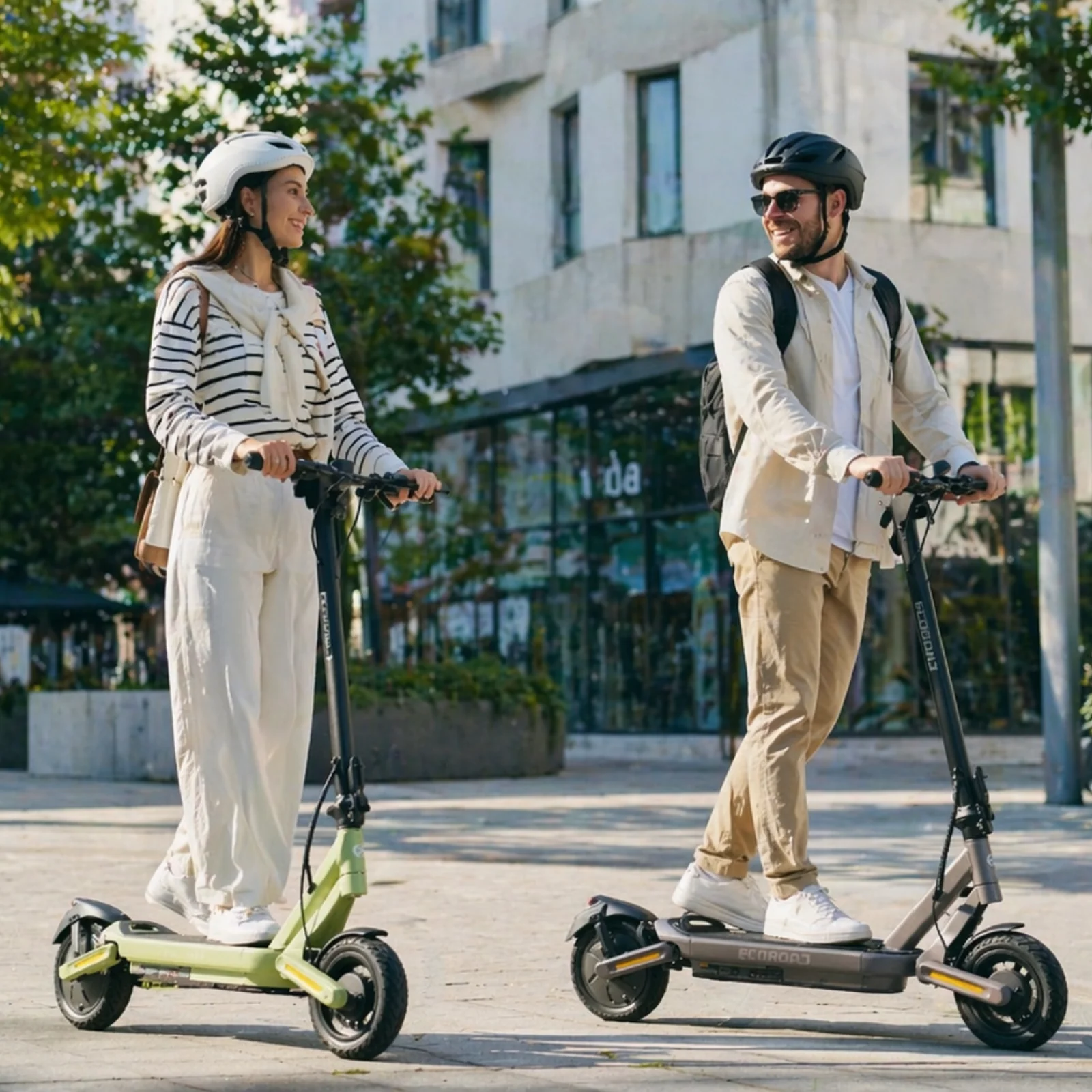
A foldable scooter is helpful in condos, apartments, classrooms, and offices. Indoor storage also reduces theft risk and protects the battery from cold.
When parking outside:
-
Use a strong lock
-
Lock the frame to a fixed rack
-
Avoid blocking sidewalks, curb cuts, doors, and transit stops
-
Remove small accessories
-
Park in visible areas
If your building has lithium battery rules, follow them carefully. Some condos and offices have specific charging or storage policies.
Make the Ride Comfortable
Small details make a big difference when you ride daily. Wear shoes with grip, balance your backpack weight, keep gloves handy, and check tire condition often.
A quick pre-ride check should include:
-
Battery level
-
Brake response
-
Lights and signals
-
Tire condition
-
Folding latch
-
Loose bolts or rattles
These checks take less than a minute, but they prevent most avoidable commute problems.
Build Your No-Stress Route
An electric scooter can be one of the easiest ways to move through a big city, especially when the trip is too short to drive but too long to walk. The best results come from planning your route, knowing your range in kilometers, checking local bylaws, and treating weather as part of the commute.
A strong commuter setup is practical, not flashy: reliable brakes, visible lights, stable tires, enough battery, and storage that works at both ends of the trip. Get those basics right, and an e-scooter can become a dependable part of your daily routine.
What Riders Usually Ask
Are electric scooters good for commuting?
Yes, especially for short urban trips and first-mile or last-mile transit connections. Always check local e-scooter rules first.
How far can an electric scooter travel on one charge?
Many commuter models offer roughly 30 to 56 km of range, depending on terrain, temperature, rider weight, speed, and battery size.
Can I ride an electric scooter on the sidewalk?
Often no, but rules vary by city. Check your municipality’s current e-scooter bylaws before commuting.
Do I need a helmet?
Helmet rules vary, but wearing one is strongly recommended for every ride, regardless of age or local minimums.
What is the best weather for scooter commuting?
Dry weather with moderate temperatures is best. Rain, ice, snow, and extreme cold can reduce traction, braking control, and battery range.